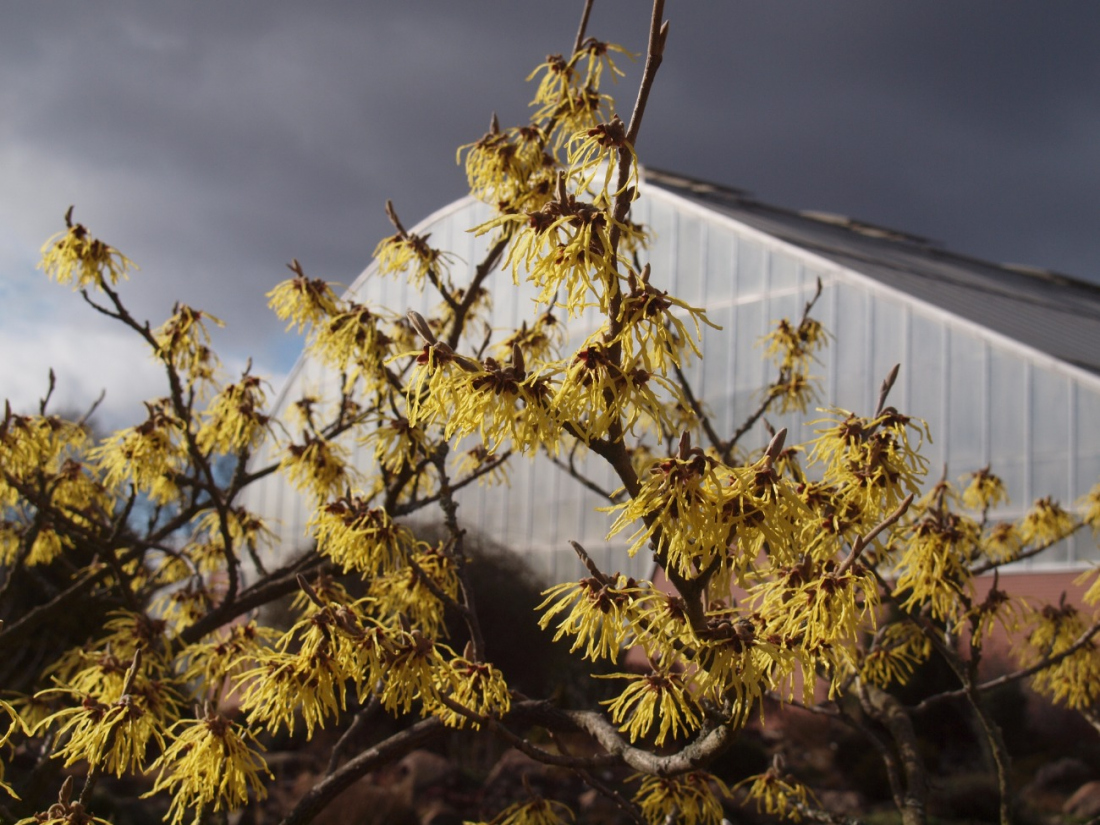
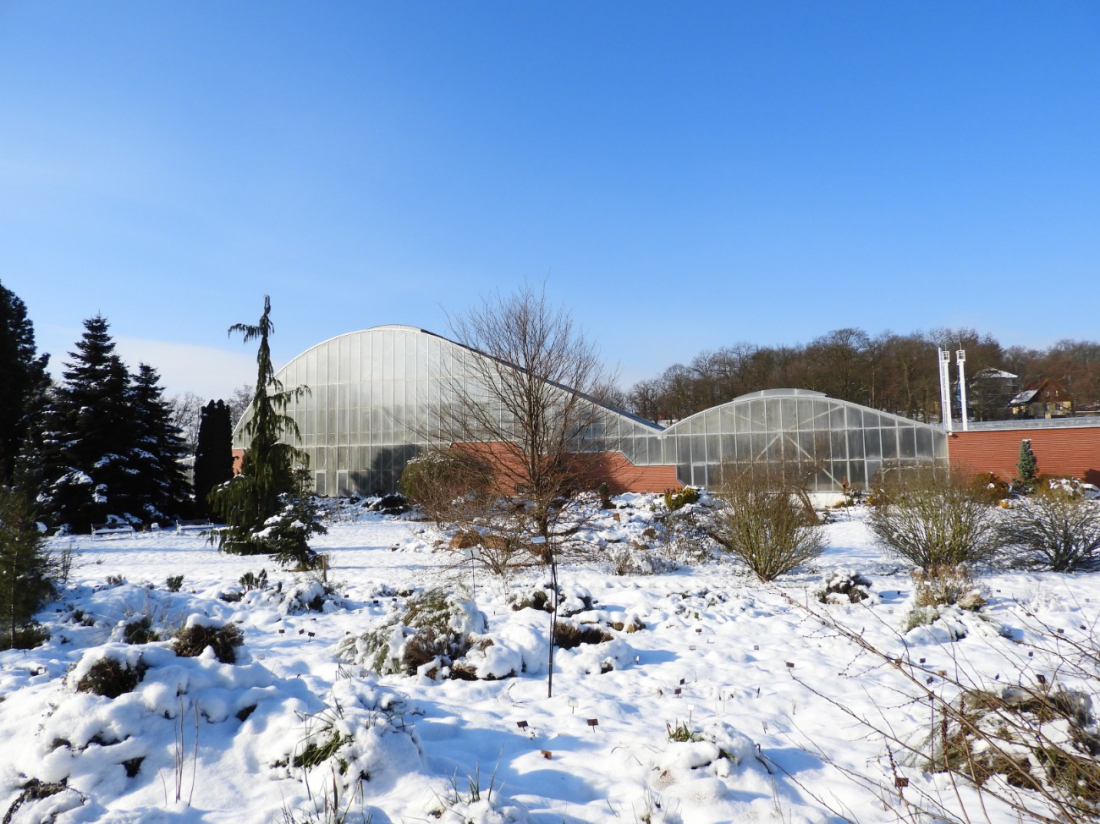
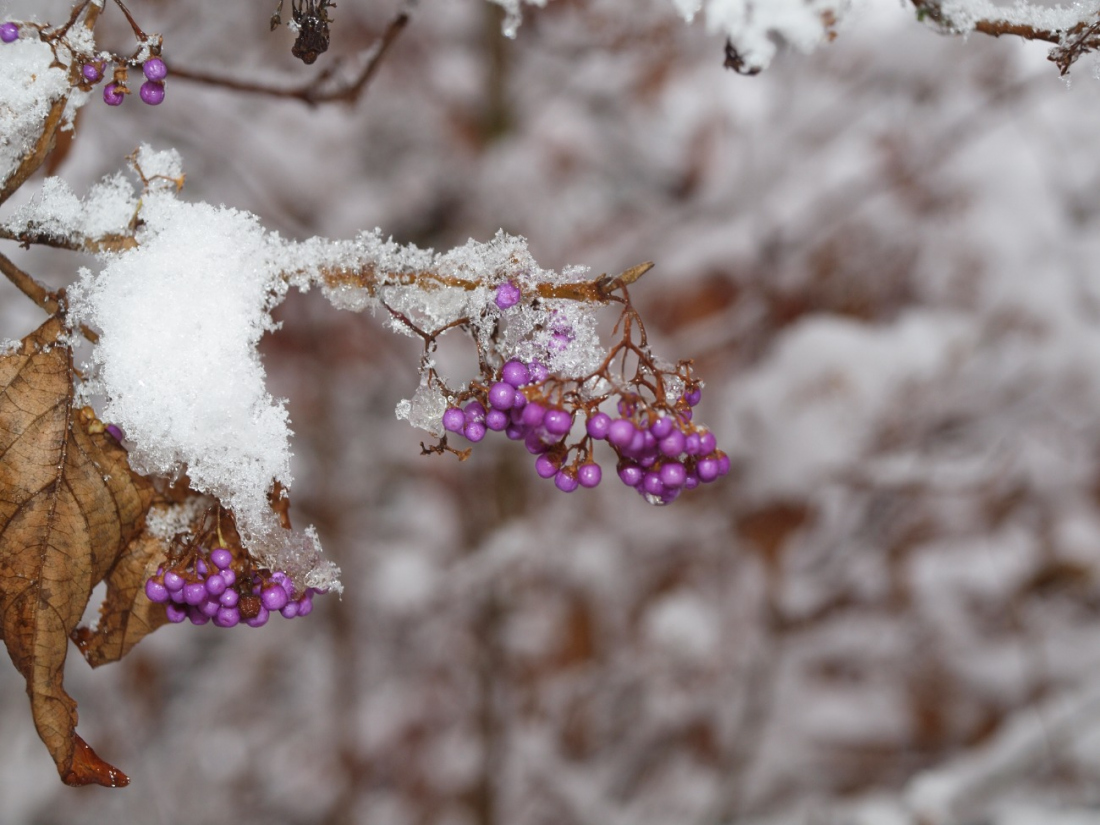
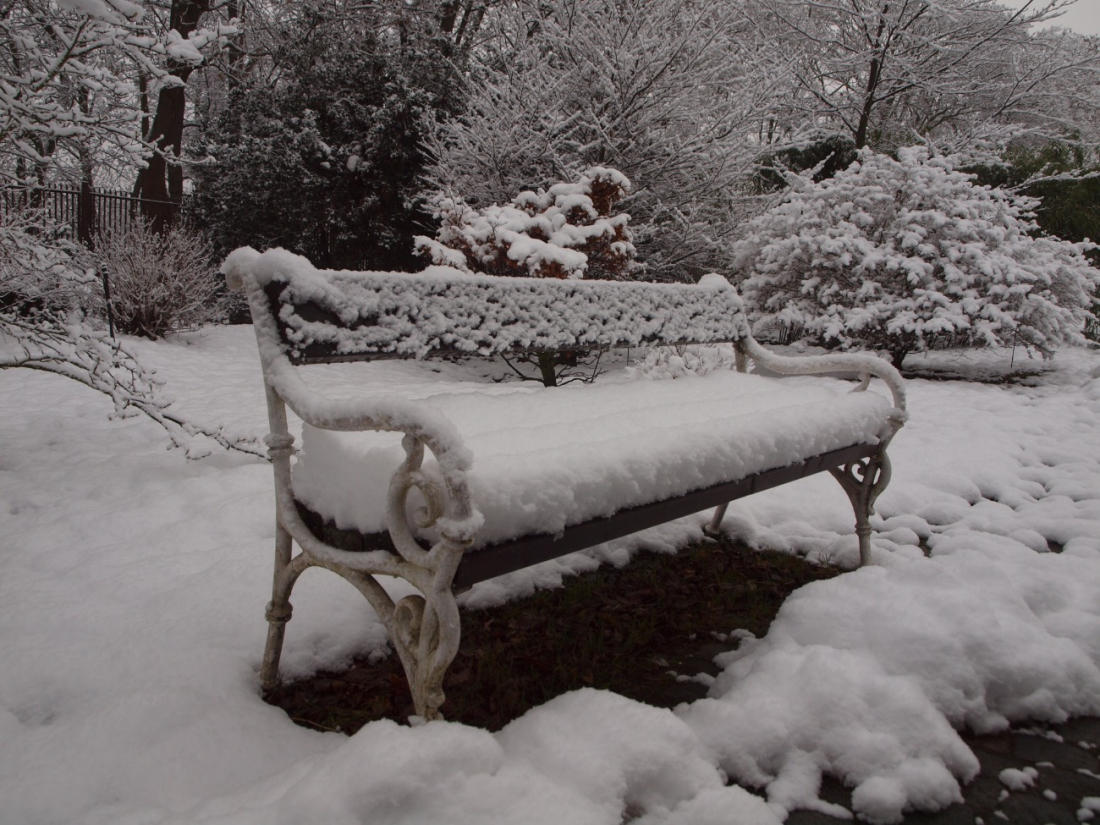
The mountain gorges of Tibet and the provinces of western China are home to winter jasmine (Jasminum nudiflorum), which in our region often begins to bloom as early as December. Here, you can find it in the Asian section of the botanical garden. The king of winter flowering is witch hazel (Hamamelis) – several representatives can be found on the central lawn (and one related species can also be found in the subtropical greenhouse, where it blooms at the same time).
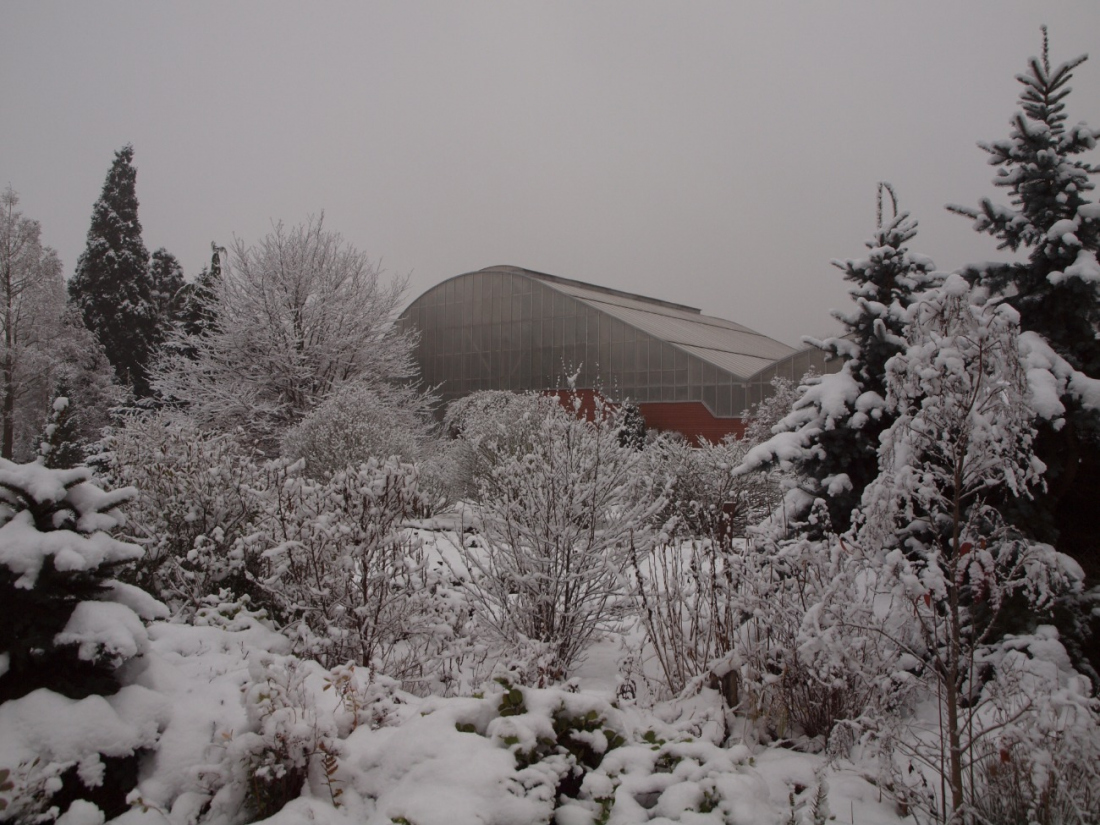
Who stands out the most in an otherwise empty garden? Evergreen plants – whether various conifers, holly (Ilex aquifolium), or evergreen rhododendrons. A tip for your visit! In the mountainous regions of Mexico, Guatemala, and Honduras, at elevations ranging from 1,500 to 3,500 m above sea level, grows Mexican white pine (Pinus ayacahuite), which we display in the outdoor Mexico exhibit. And what about when hoarfrost covers the dried flower heads of grasses and creates a truly wintery atmosphere?
Have you ever touched the bark of a giant sequoia? Have you ever seen the corky ridges on the branches of sweetgum? And what about the tree from which Canada balsam is obtained? Come to the botanical garden and discover the charm of woody plants that know how to surprise.
Would you like to see the sculpture called Hand of the Desert, but cannot travel to Chile? Did you know that the Olmecs and their culture first appeared in Mexico around 1200 BC? You do not have to visit the botanical garden only for plants; art lovers will also find plenty to enjoy. Look carefully around you! You may even discover some hidden works of art.
In winter, when food is scarce, bird feeders are hung up and filled with sunflower seeds, which seed-eating birds greatly enjoy. Within our outdoor exhibits, we have prepared two bird feeders – one near the herb garden and the other close to the North America section. We also hang homemade suet balls, which we prepare from sections cut from the stems of our tropical bamboo and fill with a nutritious mixture. We have recently also provided drinking stations for our feathered residents so that they can drink peacefully and undisturbed. If you are a photography enthusiast, be sure to visit. Bring warm clothing, your photography equipment, and come observe and photograph the birds. Or simply come and show your children the possibilities of feeding birds during the winter season.
While winter reigns in our latitudes, it is summer in the Southern Hemisphere. Therefore, it is no surprise that many plants originating from the other side of the world are coming into bloom. South African aloes flower with their delicate blossoms during the winter months, as does the once-popular bush lily, also known as clivia. Not to mention the Chilean exhibit of the Valdivian Temperate Rainforest. Did you know that we have a dinosaur there? Besides a skeleton, we also display a living one. Its name is Drimys winteri, and it originates from Argentina and Chile. It is a tree that can reach up to 20 metres in height, and its wood is suitable for the production of furniture and musical instruments.
A common characteristic of most plants that bloom at Christmas is the short day length, which triggers the development of flower buds. The first Christmas symbol is the plant known as the poinsettia, or Christmas star (Euphorbia pulcherrima). In 1825, it was brought to the United States from Mexico by Joel Roberts Poinsett, the U.S. ambassador to Mexico. Its association with Christmas has roots in sixteenth-century Mexico. Since the seventeenth century, Franciscan monks have included this plant in Christmas celebrations. The star-shaped arrangement of its leaves symbolizes the Star of Bethlehem, while the red colour represents the blood of Jesus. The flowers themselves are very small and inconspicuous, which is why the plant has brightly coloured red bracts to attract pollinators. With proper care, it can be grown for many years, and there is no need to buy a new plant every Christmas.
Another equally typical plant for this season is the Christmas cactus, or Schlumbergera. These epiphytic cacti originate from southeastern Brazil. Successful cultivation requires a bright location without direct sunlight, moderate watering, and occasional misting is recommended. It prefers a cooler room where the temperature remains around 18 °C. It usually sets flower buds during November.
During the winter season, the queens among flowers – orchids – come into bloom, and we display them in the showcase of the tropical greenhouse. If you are a lover of aroids and bromeliads, you will certainly find plenty to admire in our display case. Anthuriums, philodendrons, bromeliads, and orchids are ideal plants for creating a visually attractive display that brings a piece of nature into your home, and here you can gain inspiration. In this way, you can create a small tropical rainforest for your plants within the conditions of an apartment, with increased air humidity and adequate lighting.
Perhaps the most popular fish among our visitors is the vegetarian piranha. As an omnivore, it consumes green plant material, worms, fruit, and other produce. Thanks to its large and powerful teeth, it crushes nut shells, and during feeding time it creates great excitement in the aquarium. If you would like to visit it in its natural habitat, travel to Brazil and Bolivia.
Walk from the castle garden through Janáček Park to the botanical garden and warm yourself in the tropical greenhouse Tropicana. Then continue on to Doubravka and take in the view from above. Spending time in the fresh air is one of the best things you can do for yourself.