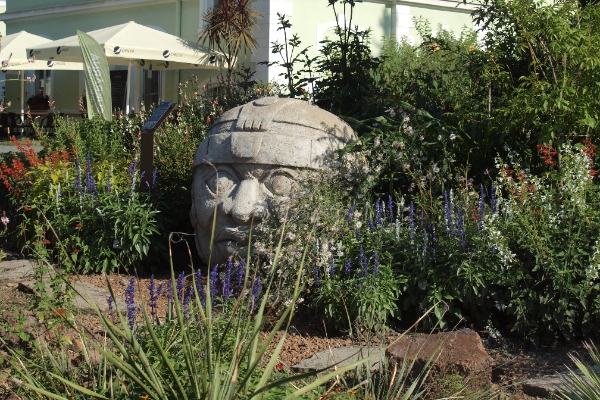
The Olmecs established the first civilization in the Gulf of Mexico region and began building monumental temples. Today, among the most remarkable artifacts are seventeen enormous preserved heads carved from stone.
Where? Outdoor Exhibition – Mexico
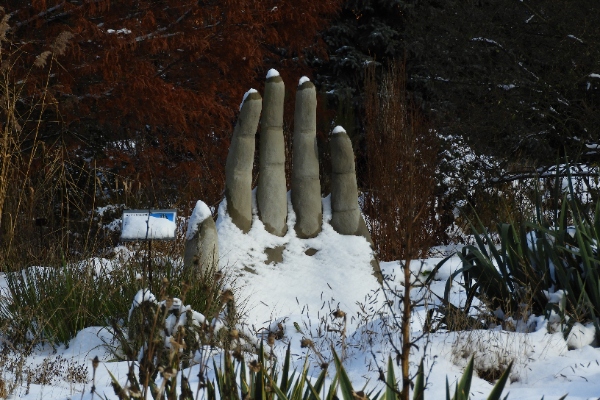
The 11-meter-tall "Hand of the Desert" (Mano del Desierto) sculpture was unveiled in 1992 in one of the driest places on Earth—Chile’s Atacama Desert. A replica in the botanical garden complements the exhibit dedicated to Chile’s desert vegetation. The symbol itself is intended to highlight the magnitude of human powerlessness and vulnerability in the vast world.
Where? Outdoor exhibition – Mexico
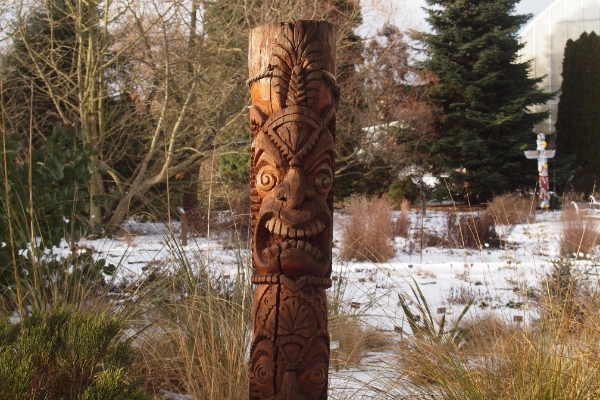
Totems are not exclusive to the indigenous tribes of North America; they can also be found in Australia, Africa, and New Zealand, and were likely common in Europe as well. The Māori are the indigenous Polynesian people of New Zealand, who settled in southwestern Polynesia before the year 1300 and brought with them many customs, including a belief in the existence of gods and demigods.
Where? Outdoor Exhibition – Australia and New Zealand
.jpg)
The totem poles of the indigenous peoples of North America are carved, monumental pillars featuring many different designs that serve to illustrate family lineages. Totem poles may symbolize figures and events from mythology or convey the experiences of ancestors and living people. The symbolism includes both animals (bears, birds, frogs) and various supernatural beings and mythical creatures. The meanings of the patterns carved on totem poles are as diverse as the cultures that create them.
Where? Outdoor Exhibition – North America
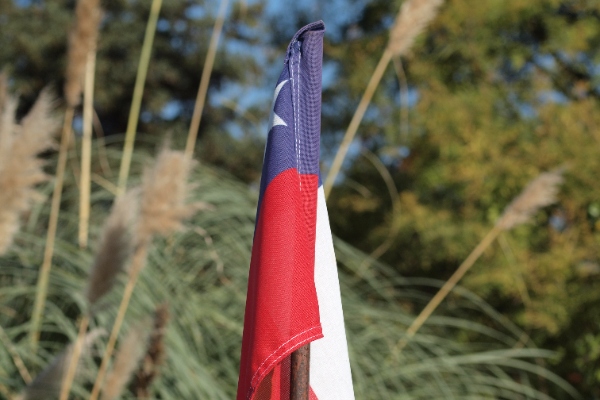
"Animita" is a term unique to Chile that can be translated as "little soul." Simple structures and imposing chapels resembling memorials line the roads of central and northern Chile.
Where? Outdoor Exhibition – Chile – Atacama Desert
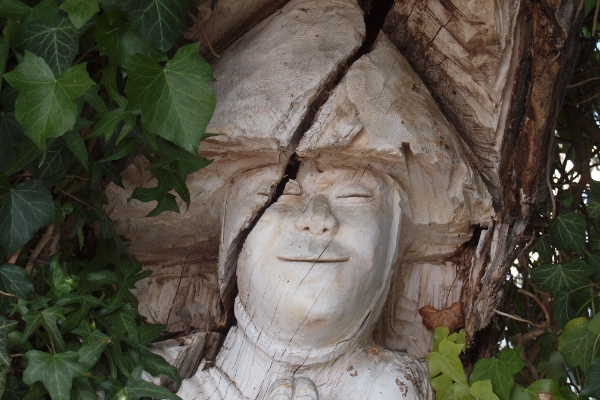
The trunk of an old ash-leaved maple served as the sculptor’s material for this addition to the East Asian exhibition. The Asian figure may be somewhat obscured by the wall of climbing ivy, but that may also be the point—to encourage contemplative observation. He wears a typical conical straw hat, which originated in South and Southeast Asia. Its conical shape serves to protect the head from the sun and rain.
Where? Outdoor Exhibition – East Asia
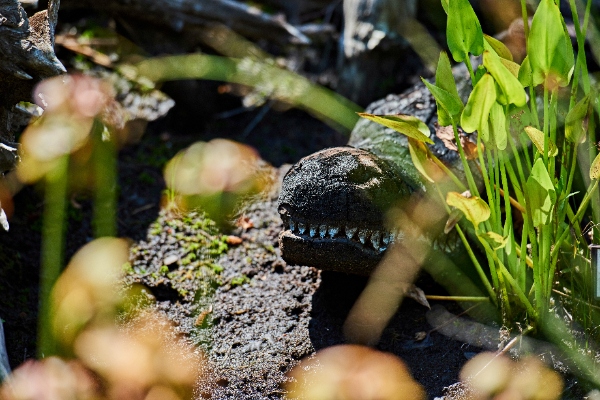
In the swampy regions of North America, you need to watch out for alligators and crocodiles when observing flowering plants—a risk you don’t face in European and Asian peat bogs. So how do you tell them apart and identify which one is lurking near the water lilies? An alligator has a U-shaped head, while a crocodile’s is more V-shaped. When an alligator’s mouth is closed, only the top row of teeth is visible; with crocodiles, all rows of teeth are visible.
Where? Outdoor exhibit – North American peat bogs
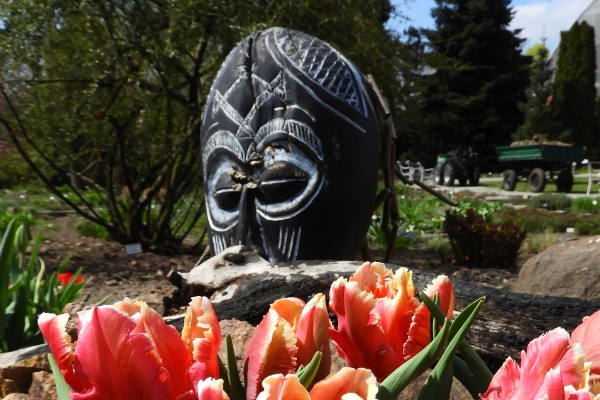
Almost every exhibit is complemented by an artifact related to the specific geographic region or theme. At the entrance to the botanical garden, visitors are greeted by a wooden snail; in the poisonous garden, skulls and bizarre creatures made of twisted vine branches are hidden; and in the South Africa exhibit, you’ll discover a mask of the indigenous people.
Where? The entire outdoor exhibit
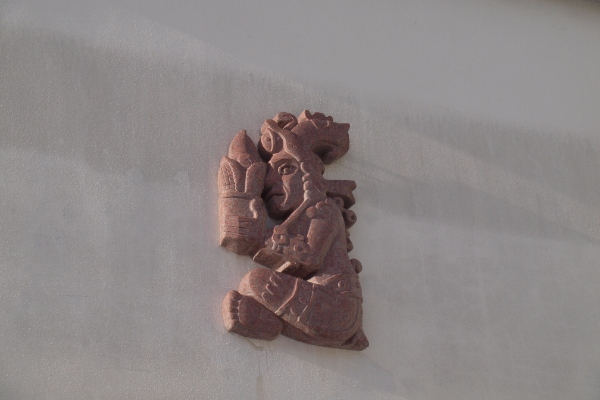
The Mayan god Yum Kaax is the protector of game animals and wild plants, the patron of agriculture, and was worshipped as the god of life, success, and abundance. Who else but him should watch over our greenhouses?
Where? Entrance to the Tropicana Greenhouse
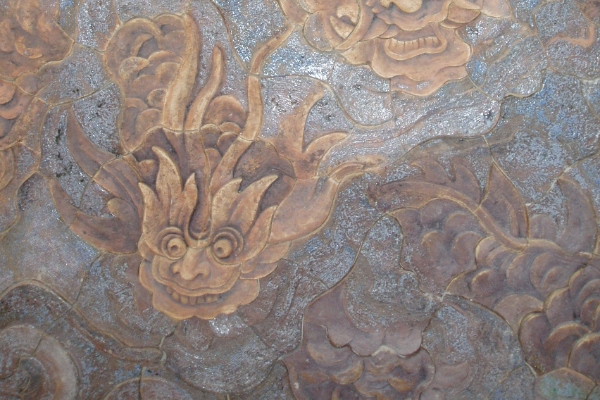
The main feature in the entrance hall (foyer) of the Tropicana greenhouse is a small pool with “Buddha’s fingers,” beautiful stalactites imported from the Vietnamese city of Vinh. The theme of dragons in storm clouds was inspired by motifs from the imperial tombs in Hué. It is a ceramic sculpture by the renowned Teplice sculptor Milan Žofka.
Where? The entrance hall of the Tropicana greenhouse

The Central American section of the xeric greenhouse features a small house in the Pueblo style, surrounded by authentic Mexican artifacts. Mexico is a country of great biological and cultural diversity, and it has a permanent place in our botanical garden.
Where? Xeric Greenhouse – Central America
.jpg)
The Central American section of the tropical greenhouse features the ruins of a Mexican pyramid, which is gradually being swallowed up by the encroaching jungle. The stones are overgrown with vines and the aerial roots of a fig tree.
Where? Tropical Greenhouse – Central America and Mexico