Since we are in a botanical garden, autumn does not necessarily have to mean only autumn. We cultivate plants from the Southern Hemisphere as well, and for some of them spring is beginning. They are awakening to life and will bring us great joy during the winter months when their beautiful flowers start to appear. We are talking, for example, about South African and South American bulbous plants, which remain dormant during our summer in underground bulbs or tubers and only begin their growth when conditions become favorable.
You certainly should not miss the asters in full bloom (which today are classified under the scientific name Symphyotrichum). Their flower heads are characterized by a yellow center, while the ray florets can range in color from pure white through pink to purple. In the outdoor Mexican exhibition, you can still admire Mexican dahlias with yellow, pink, or red flower heads. Autumn is also symbolized by autumn crocuses (Colchicum), poisonous beauties with large flowers that should not be touched. Did you know that after pollination, autumn crocuses produce seeds located near the underground bulb, which emerge together with the leaves in spring? This is why in the Middle Ages they were called filius ante patrem (son before father).
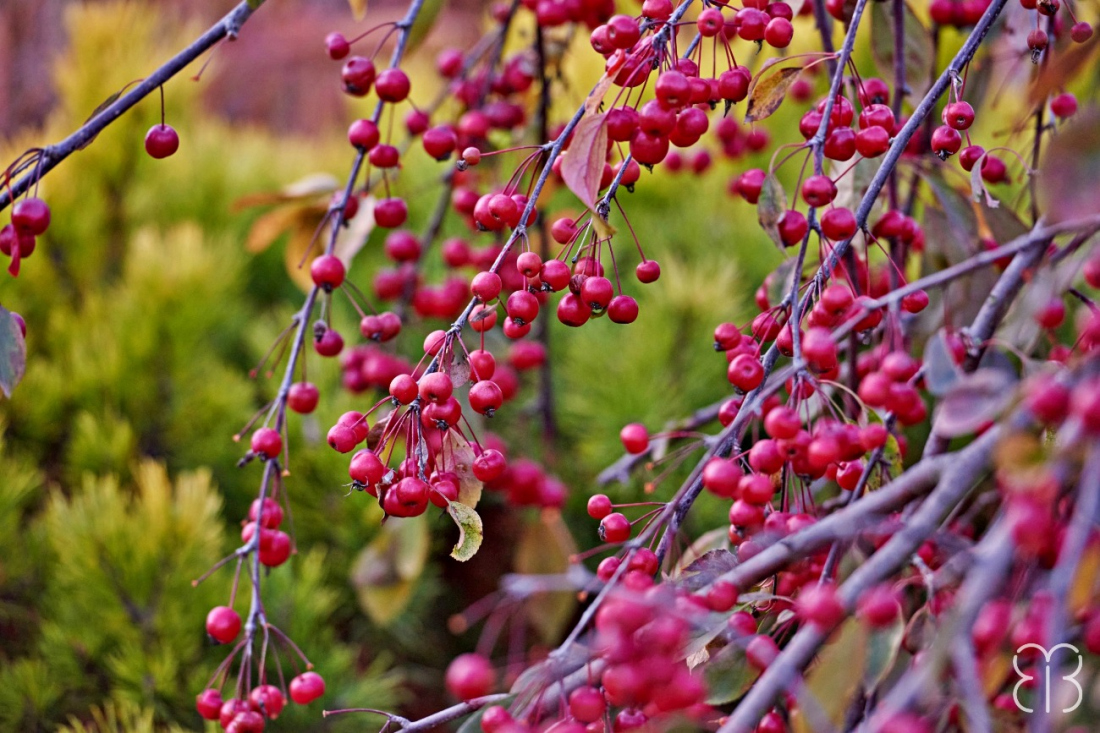
October in the botanical garden is marked by fruits of many colors that attract birds looking for a meal. On the rock garden bordering the greenhouse grows a small tree with drooping branches – an apple tree cultivar called ‘Royal Beauty’, which bears very small apples no larger than cherries. Similar tiny apples can also be found on an ancient apple tree in the East Asian grove. You can recognize it by its twisted trunk and the aforementioned red miniature apples.
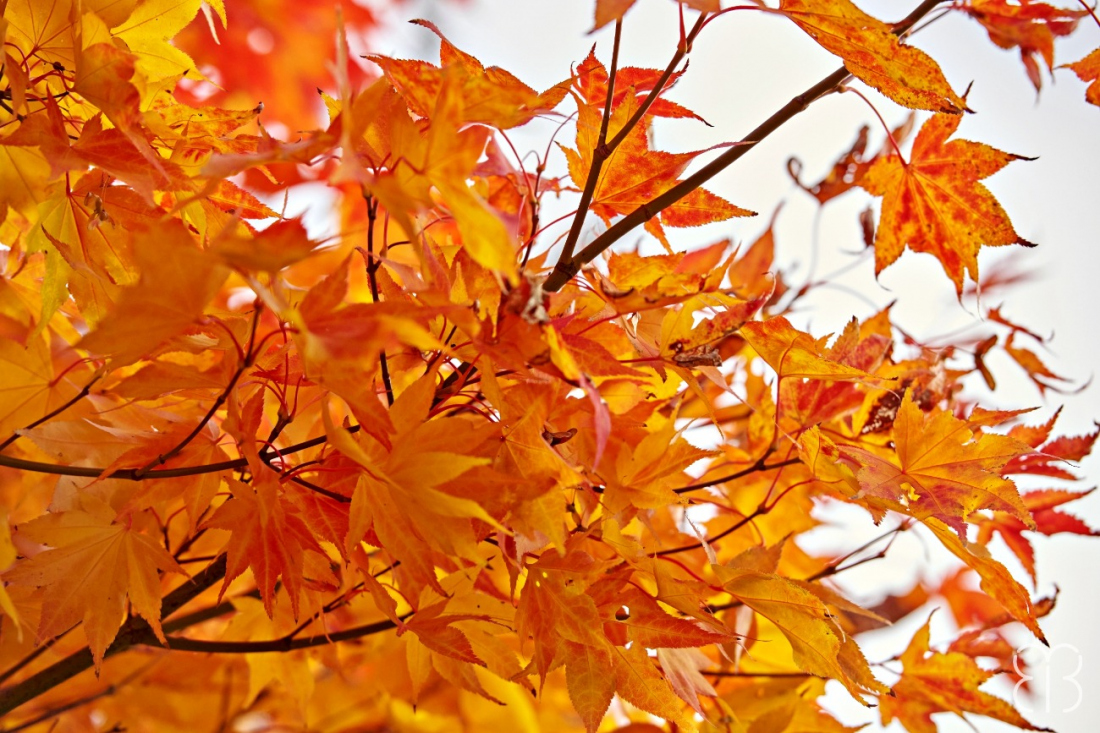
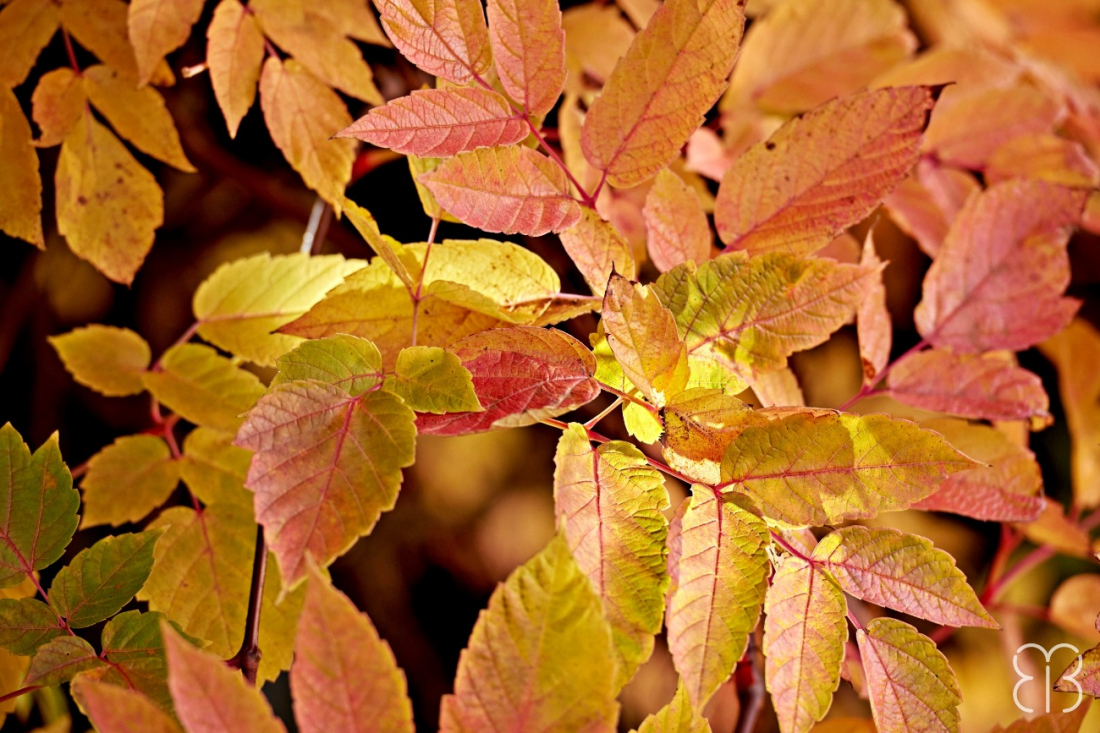
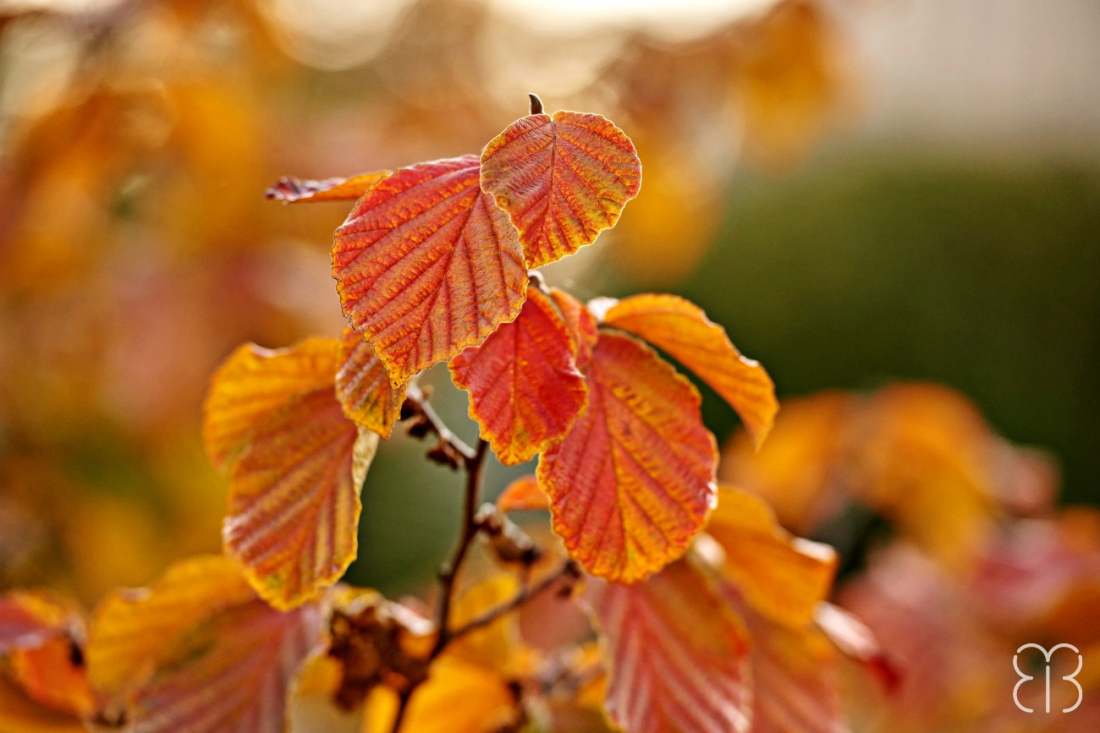
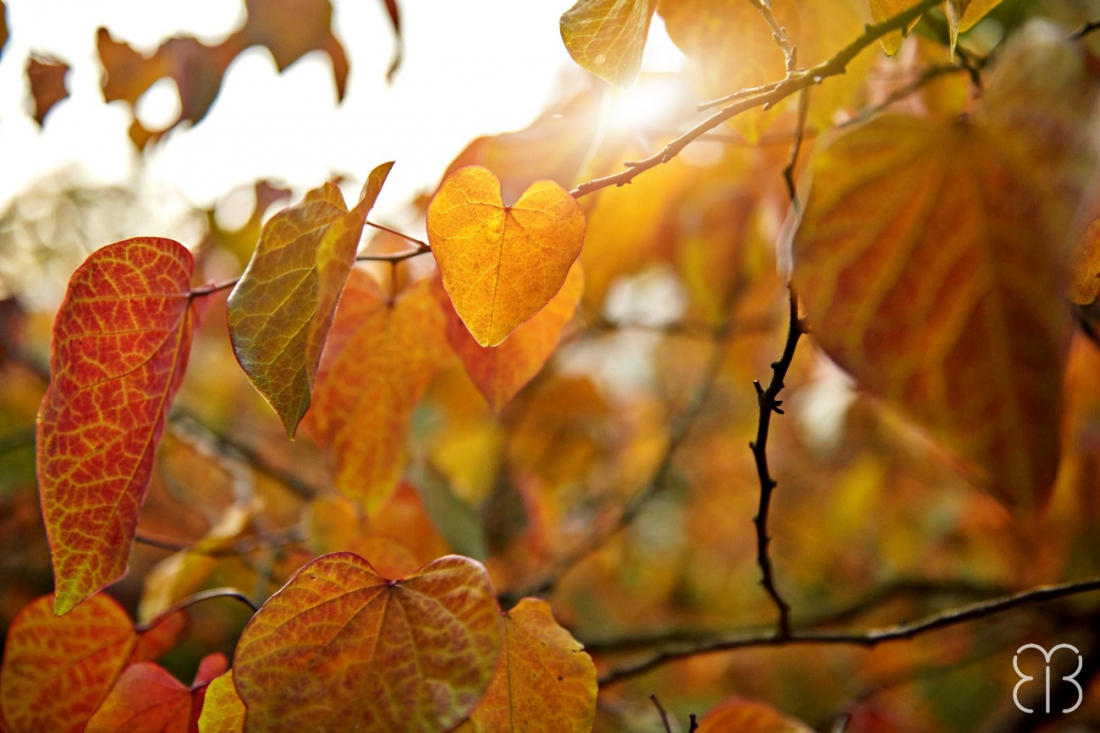
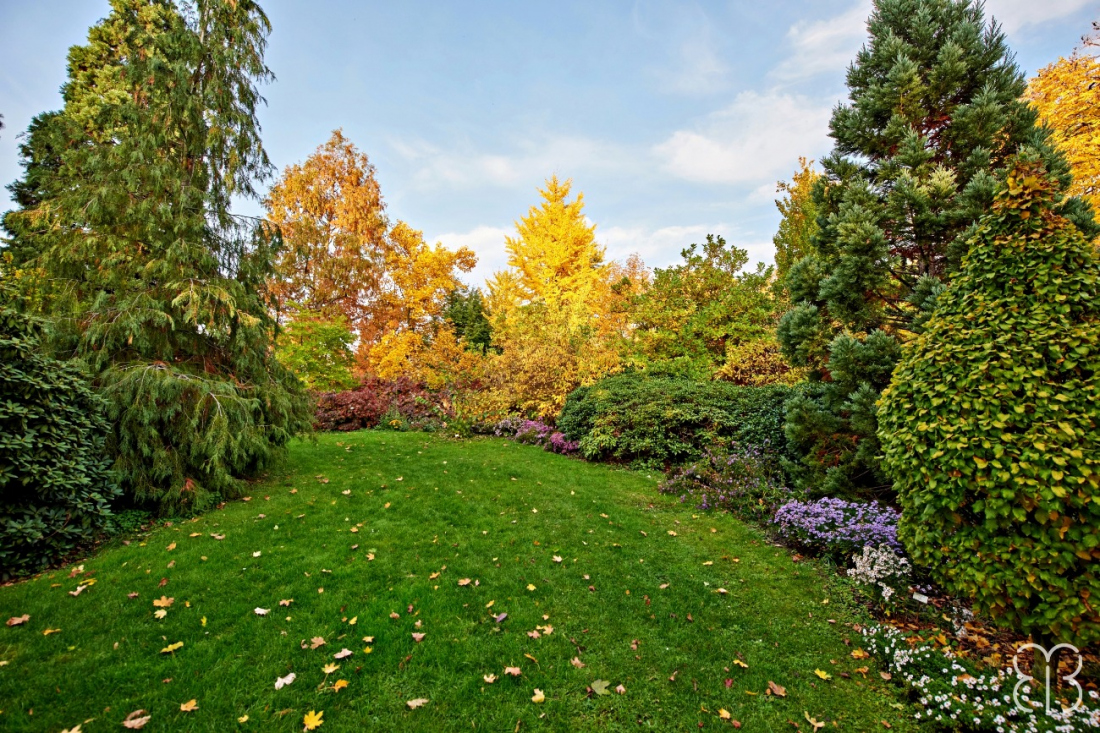
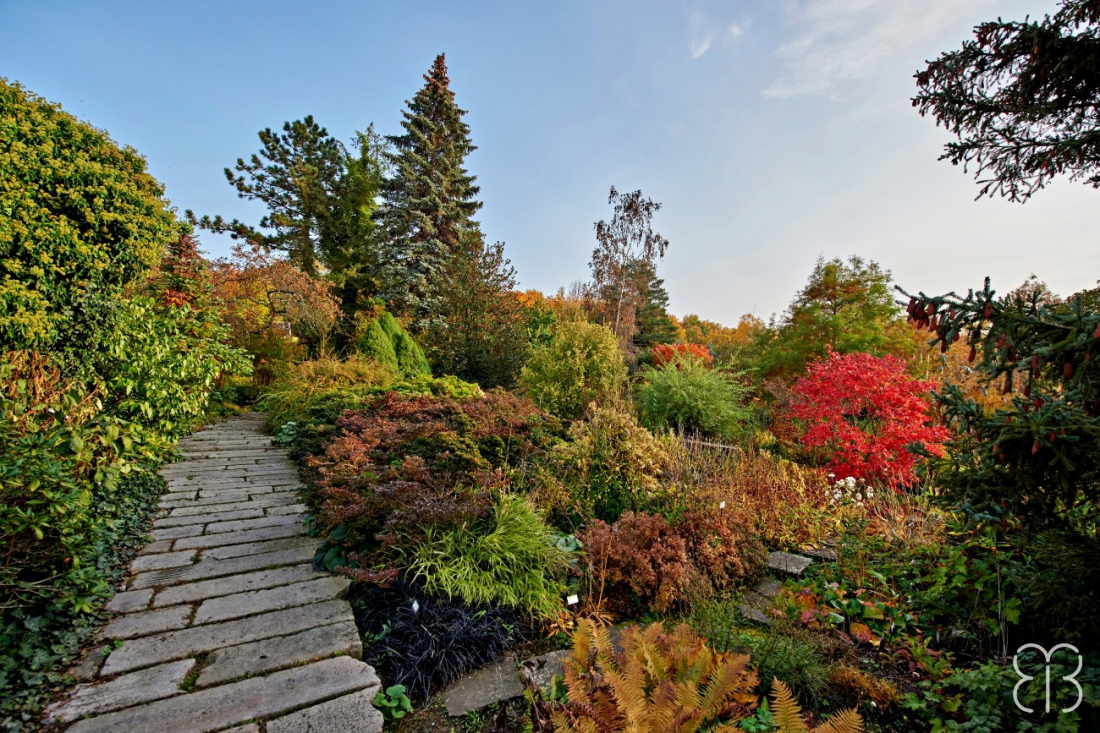
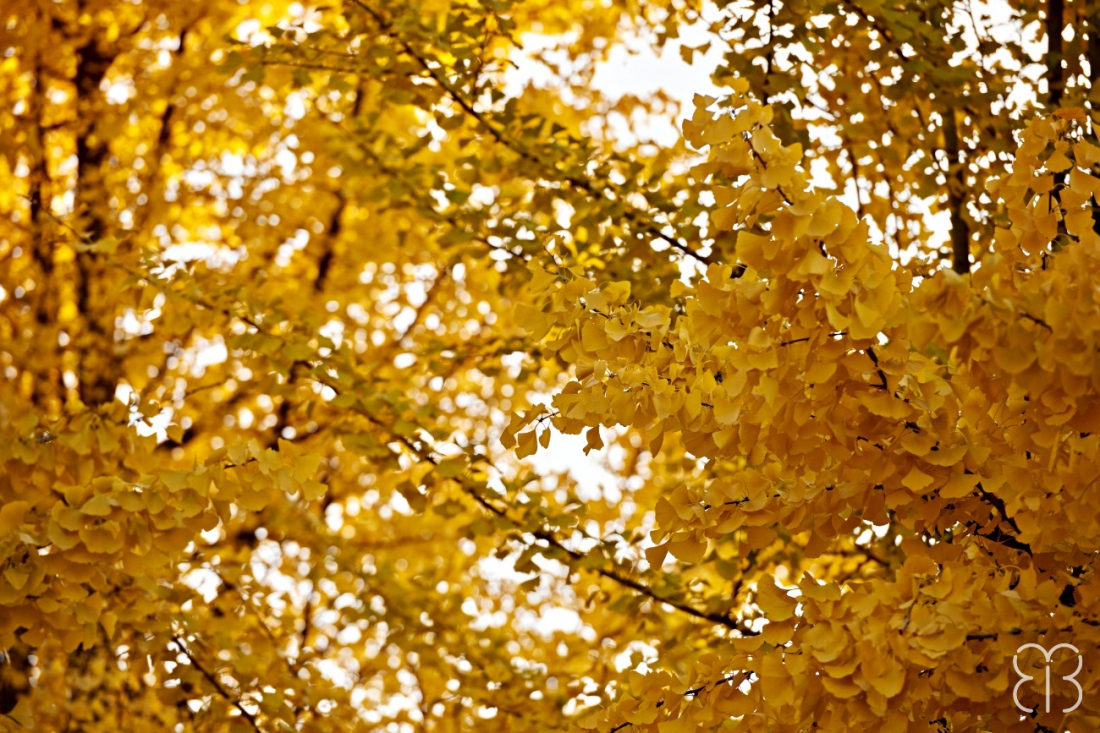
The trees are gradually beginning to change color, and it is an incredible sight. The Amur cork tree turns a rich yellow color and was once widely used as a source of cork. The tulip tree and the maidenhair tree (Ginkgo biloba) are also beginning to turn the same shade. More and more trees gradually join the first ones displaying autumn colors – including our European beech. In our small arboretum, we have several cultivars whose foliage ranges from golden to brown. Perhaps it is here in the botanical garden that we can show you that autumn is not merely gray and foggy but possesses its own colorful charm.
It is not only deciduous trees that display beautiful colors. Do you remember the category of “deciduous conifers”? The first species that probably comes to mind is the larch, a typical representative of the light taiga forests of northern Europe. In the botanical garden, however, you can broaden your horizons and discover other representatives as well. You can observe rusty-colored needles on the dawn redwood (Metasequoia glyptostroboides), which was not discovered until the 1940s in China. During winter, it sheds entire branchlets. The bald cypress (Taxodium distichum), a moisture-loving plant from the United States of America, behaves in the same way.
Every autumn, we regularly organize creative workshops where you can decorate ornamental cabbage, whose colors stand out beautifully in the cooler autumn weather. Autumn does not have to be gloomy – decorate your balcony or home with the help of the botanical garden. Get inspired – why not use harvested but unused chili peppers as an original decoration? We have not forgotten about Christmas either. Advent begins at the end of November, which is still an autumn month. We will be happy to help you with these decorations as well.
Every November, you can see fruiting Dovyalis in the xeric greenhouse. This genus includes 15 species distributed throughout Africa and South Asia. It is nicknamed the “tropical apricot.” The fruits are edible, very juicy inside, and pleasantly tart. A hybrid between two species was developed in Florida in 1953, and since then it has been cultivated for fruit production. A single tree can yield up to 45 kilograms of fruit per year, and its hard wood is also used to make tool handles, bed frames, and spoons.
The twelve-hour photoperiod that occurs at the beginning of autumn reminds many tropical plants of their homeland, where day and night are of equal length. Autumn, when the most intense heat has passed, is therefore the best time to visit the tropical greenhouse, where countless plants are in bloom. On the shore of the pond in the tropical greenhouse, you can encounter a plant with large white flowers. It is Eucharis × grandiflora, native to western Colombia and Ecuador. The word Eucharis comes from Greek and means “graceful” or “charming.” From this derives the Czech common name líbenka; sometimes the name eucharidka can also be encountered.
The last warm rays of sunshine invite you to enjoy them – perhaps while sitting on a bench in the botanical garden. Colorful leaves, the last flowers of the season, and the opportunity to warm up in the tropical greenhouse – isn't that the perfect combination?
Take advantage of the guided tours of the Tropicana greenhouse offered shortly after dusk, or after four o’clock in December. You will have the opportunity to enjoy the atmosphere of a dimly lit rainforest. By then, you may already hear the tiny greenhouse frogs (Eleutherodactylus planirostris). These frogs grow to a maximum size of only 3 centimeters. Interestingly, small froglets hatch directly from the eggs, completely skipping the tadpole stage.