| Length | Width | Height | Area | Number of cultivated taxa | Daytime temperature | Nighttime temperature | Humidity | Number of gardeners |
|---|---|---|---|---|---|---|---|---|
| 54 m | 9 m | 6,5 + 1 m | 486 m2 | 343 | 17–25 ℃ | 7–17 ℃ | 50–70 % | 1 |
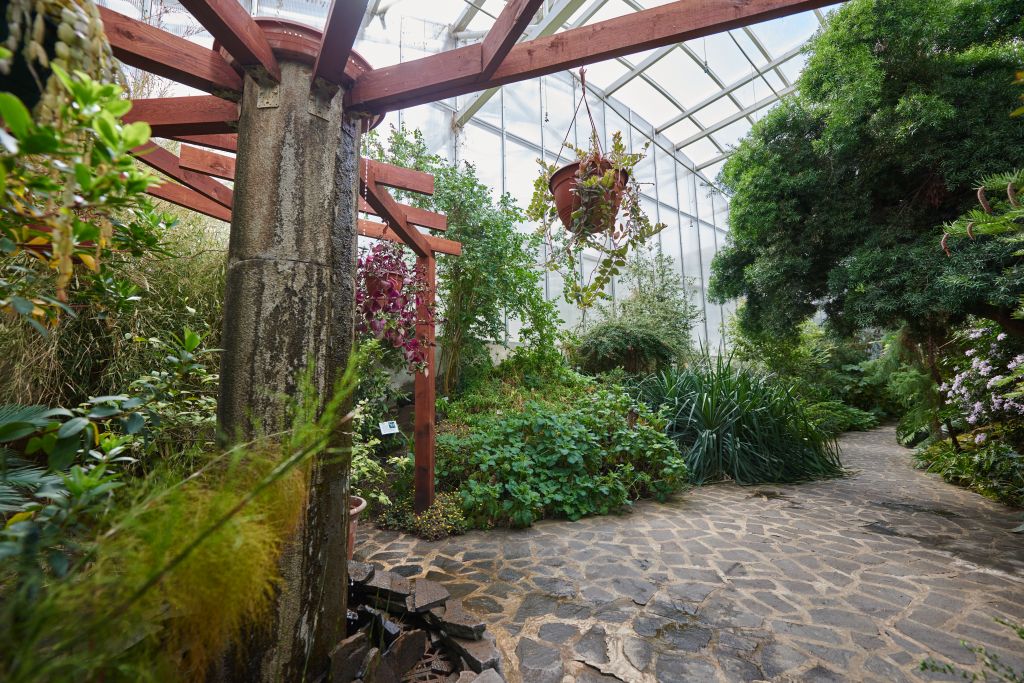
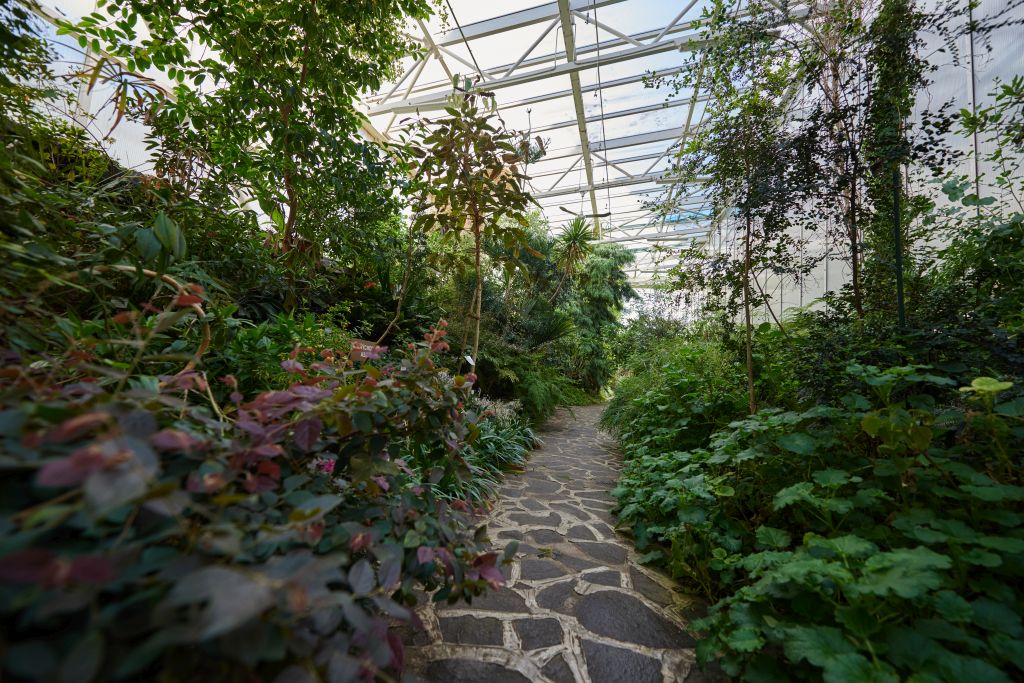
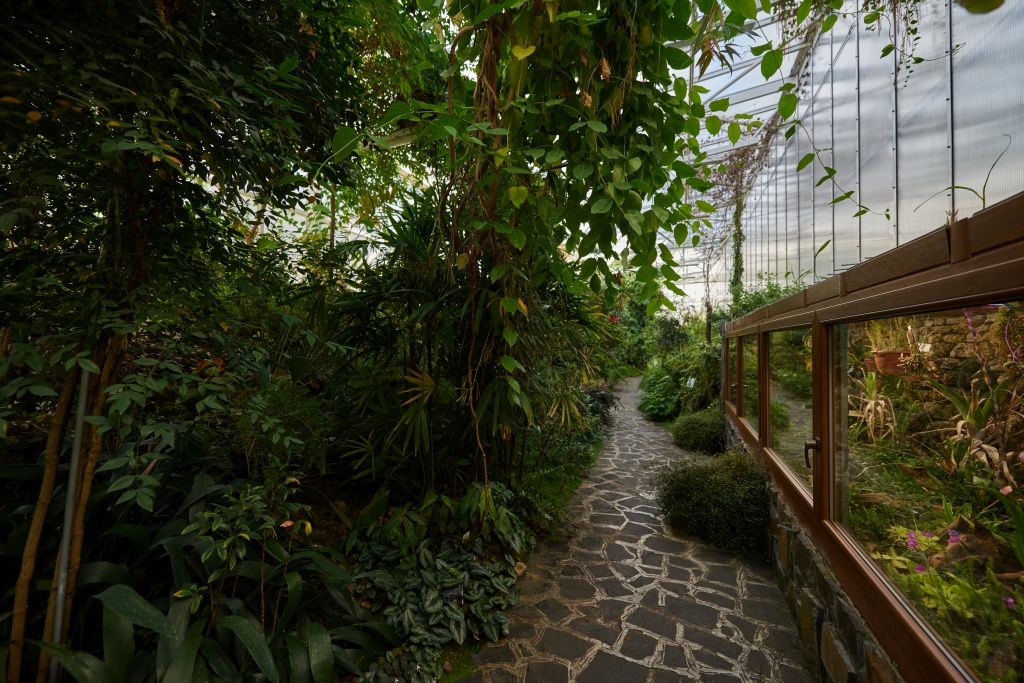
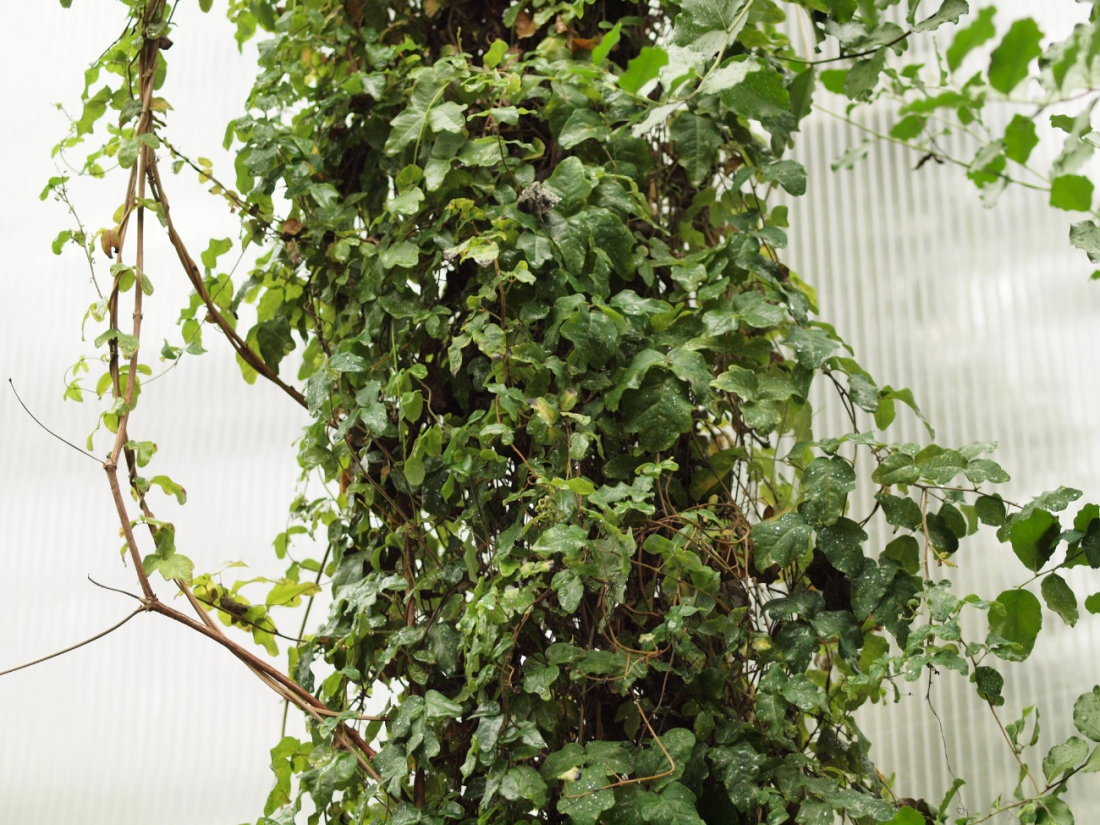
We will leave the tropical regions and head north (in the Northern Hemisphere) or south (in the Southern Hemisphere). Or we will remain in the tropical regions but head into the mountains. The subtropical greenhouse represents forested mountainous areas of the tropics and subtropics, with some overlap into the temperate zone. This is illustrated by the exhibits below. During the winter, it is advisable to keep your jacket on, as temperatures in subtropical and mountainous regions can drop below 10 °C.
A few figures: 343 taxa, 320 species, 20% of which are listed on the Red List of Threatened Plants.
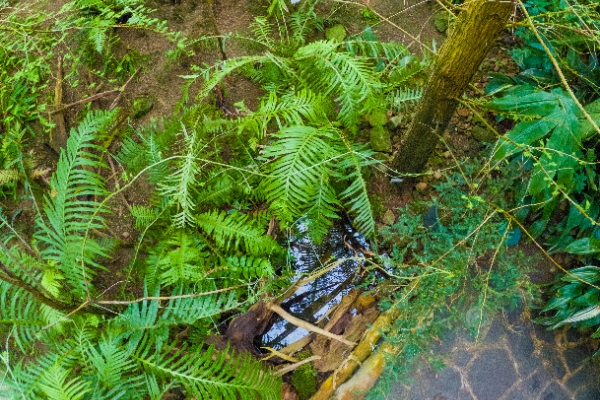
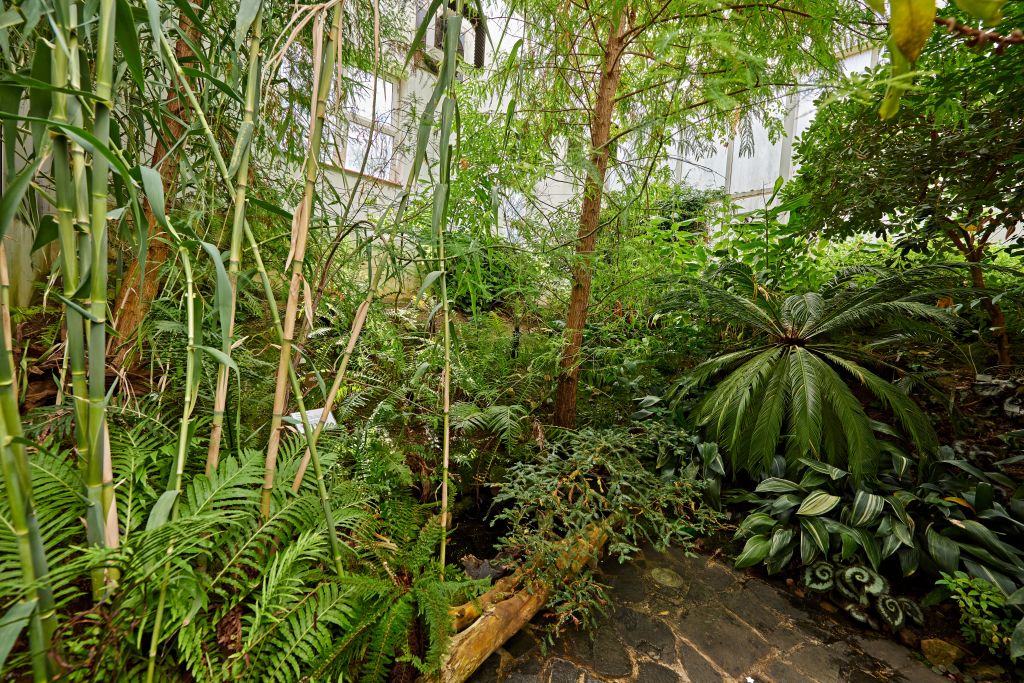
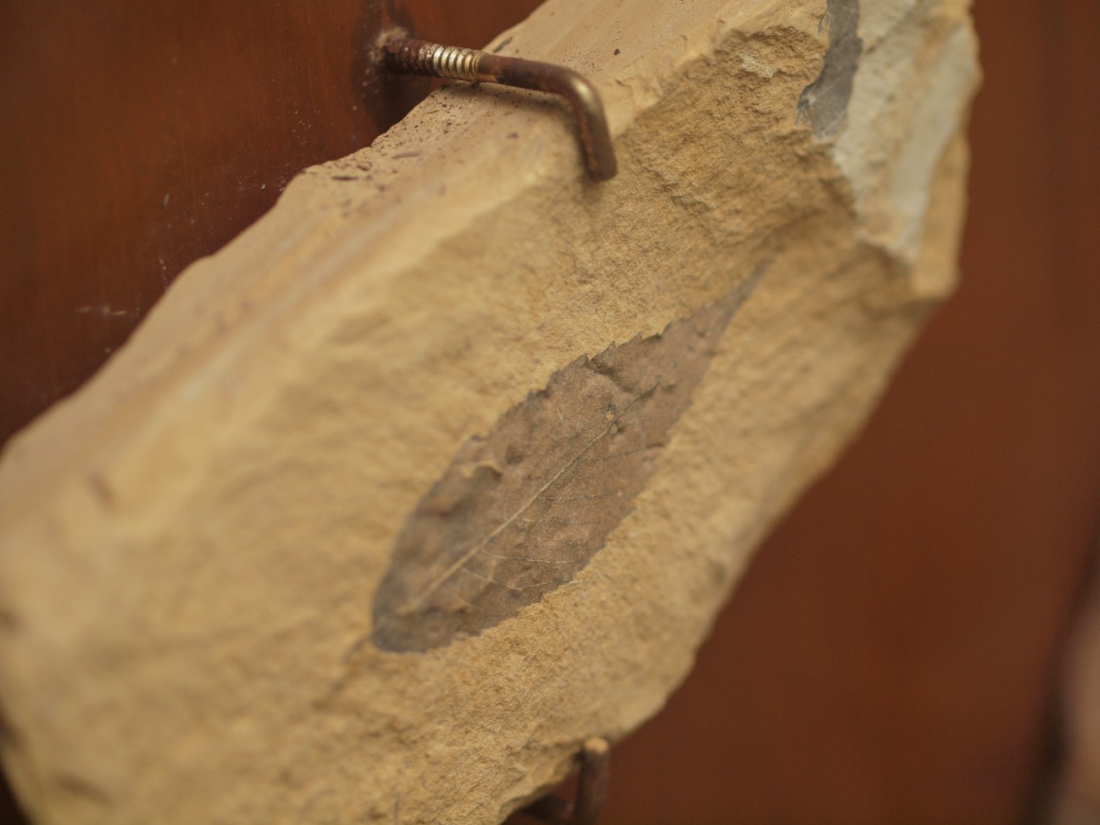
The subtropical greenhouse features an exhibit recreating the North Bohemian brown coal landscape of the early Miocene (roughly 17–23 million years ago), as the lives of Teplice residents have long been influenced by the city’s location within the North Bohemian brown coal basin. The exhibit also includes a display case with plant fossils.
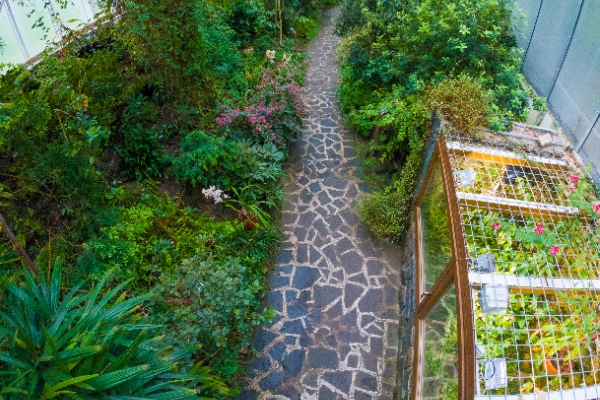
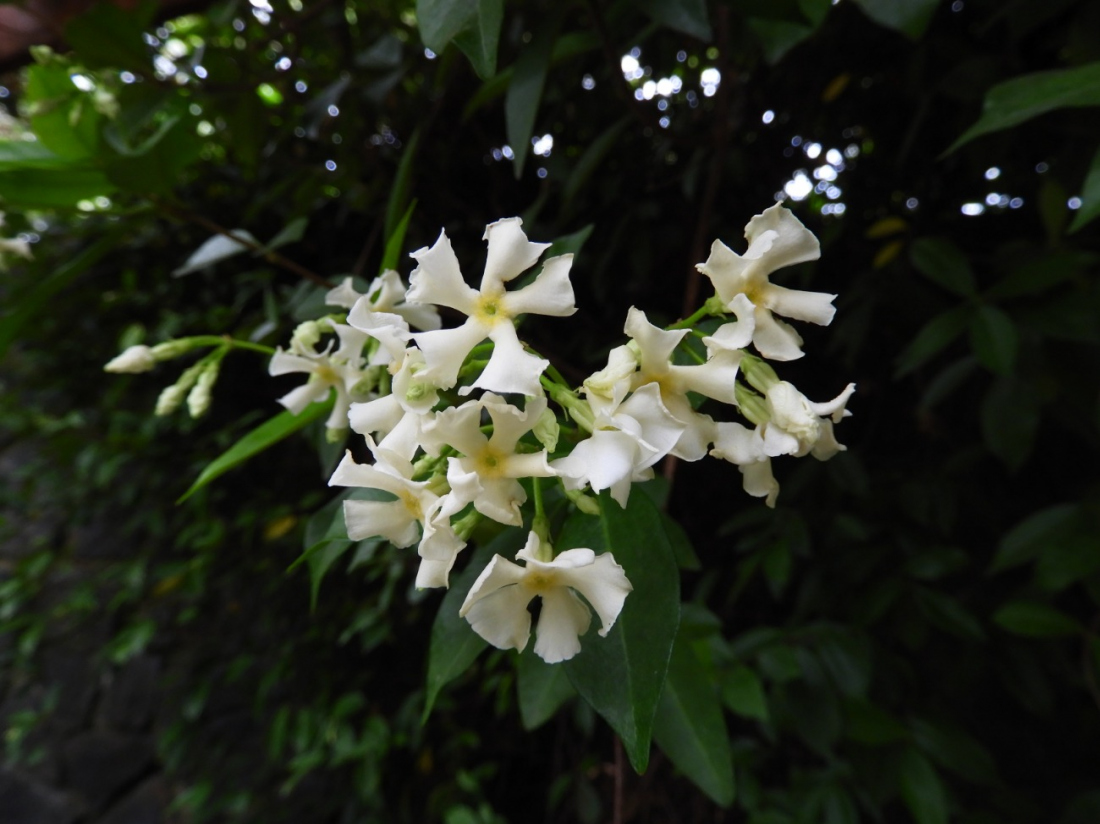
The subtropical greenhouse features an exhibit focused on the mountainous regions of subtropical Asia—particularly China—at elevations between 2,000 and 3,000 meters above sea level. The evergreen forests influenced by the monsoons do not exhibit the same vertical diversity as lowland tropical rainforests. Here, typical representatives of tropical vegetation are found alongside those that commonly grow in temperate regions.
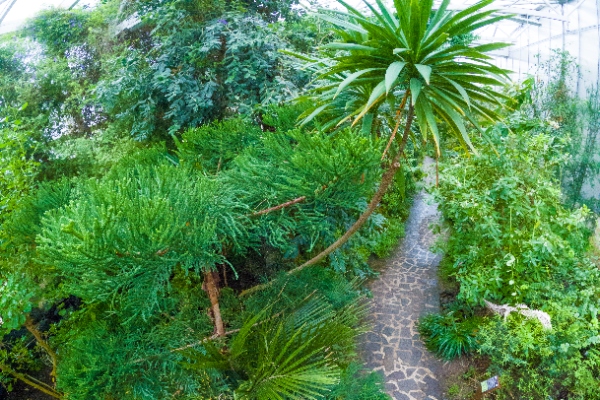
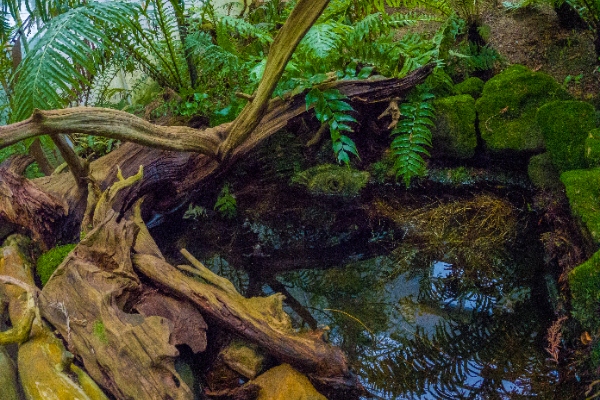
This small exhibit focuses on New Zealand’s cool-climate forests, which extend up to an elevation of 1,500 meters. Interestingly, the plants of New Zealand and South America are evolutionarily much closer than those of New Zealand and Australia.
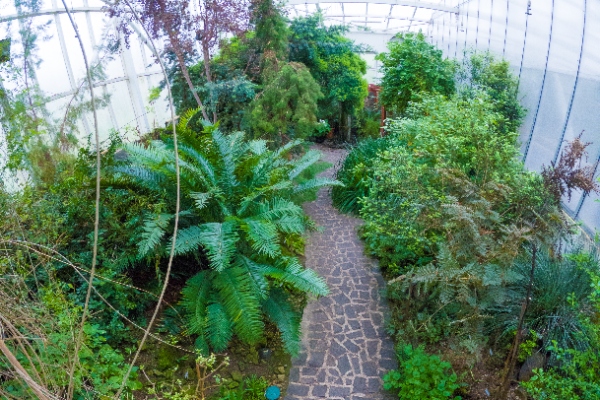
Southeastern Africa is a vast region encompassing at least five completely distinct biomes (such as evergreen forests or the steep slopes of the Drakensberg Mountains), with summer rains serving as their sole connecting factor. In the subtropical greenhouse, we showcase plants from the forested coastal regions of the eastern parts of South Africa.
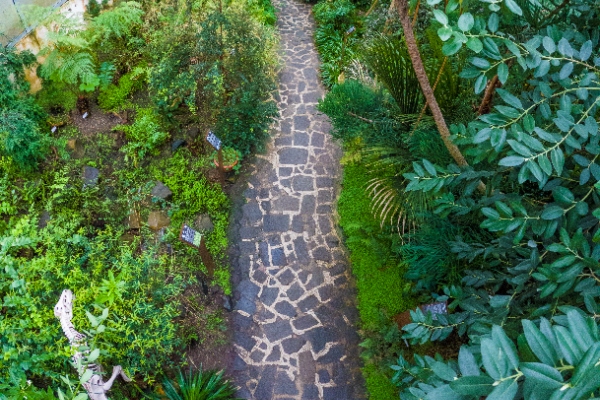
The western part of southern Chile and a portion of Argentina between 37° and 48° south latitude, bordered by the Pacific Ocean to the west and the slopes of the Andes to the east, are covered by dense forest. This forest is dominated by bamboos, ferns, conifers, and broad-leaved and evergreen trees. This is the only temperate rainforest in South America, and during the breakup of the supercontinent Gondwana, it became a refuge for Antarctic flora (which occurred during the Jurassic and Cretaceous periods).
And who are the biggest "stars" of our subtropical greenhouse? Here are some highlights from the 343 taxa we grow.
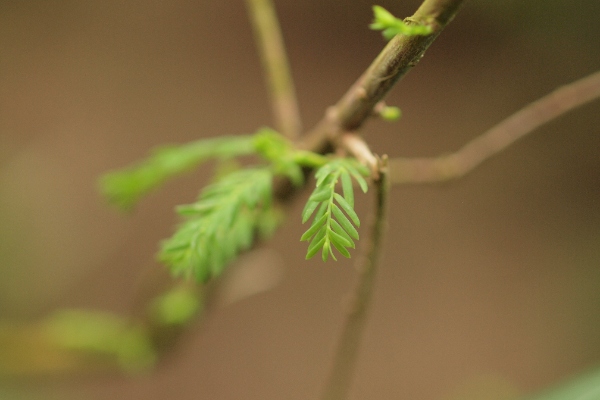
This species of yew is native to Mexico and Guatemala. In 1910, it became the national tree of Mexico and is considered sacred by the indigenous people. It has been used as an ornamental tree since pre-Columbian times, when it was cultivated in parks and gardens. The wood is used for making beams and furniture. The Aztecs used its resin to treat gout, skin diseases, ulcers, and toothaches.
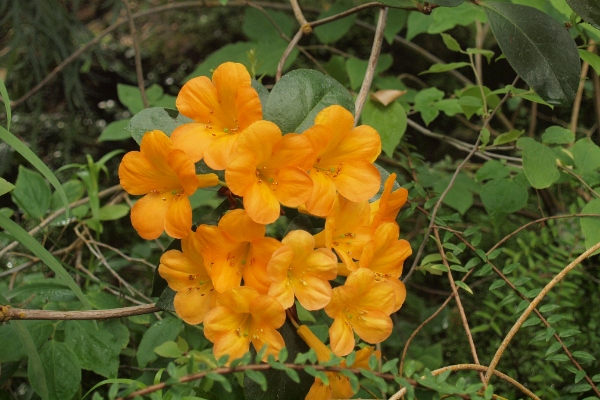
Rhododendrons aren’t just found in outdoor displays; you can also find them in the Asian section of the subtropical greenhouse. Take, for example, the yellow-flowered Rhododendron laetum, which grows in the Lake Anggi region of the Arfack Mountains in Indonesia.
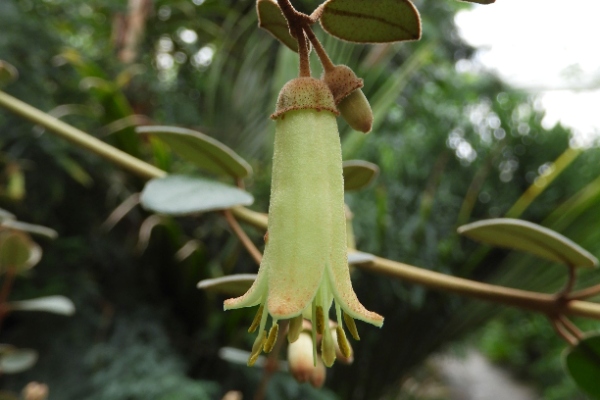
Along the coast of South Australia, you may come across a shrub with leathery, elliptical leaves that are densely hairy on the underside. The petals are white to cream-colored, and its eight stamens are slightly longer than the entire corolla. This is Correa backhouseana. In the United Kingdom, it can be grown outdoors, as it tolerates frost down to -5 °C.
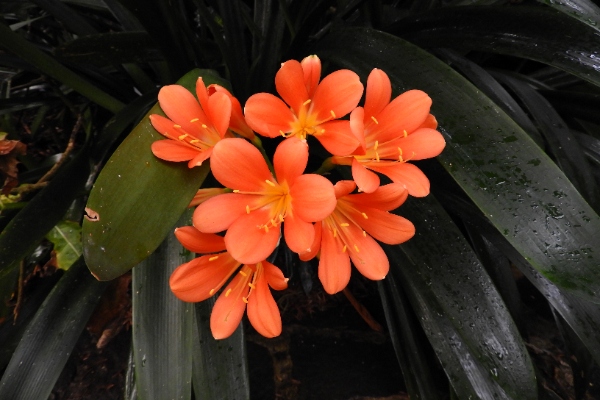
Beneath our centuries-old Afrocarpus gracilior, the red clivia (Clivia miniata) blooms regularly in the spring. It originates from South Africa and was introduced to Europe as early as 1800, where it became a very popular houseplant. During its dormant period (from September to January), it requires a temperature reduction to 10 °C and reduced watering. Only by doing this will you be able to enjoy its beautiful flowers just as we do.
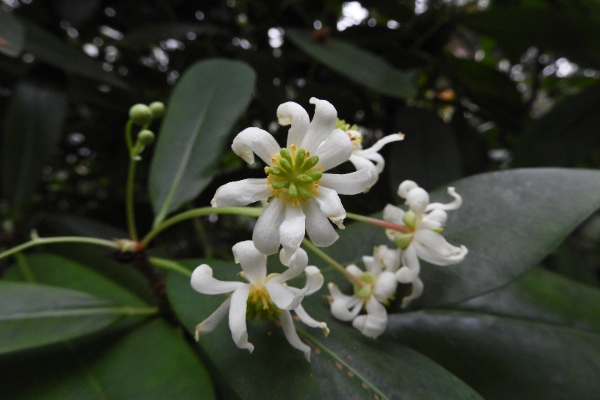
Would you like to see a dinosaur? A dinosaur among the plants? We have one right here in our botanical garden! It’s called Drimys winteri and comes from Argentina and Chile. It’s a tree that can grow up to 20 meters tall, and its wood is suitable for making furniture or musical instruments. Its bark can also be used in an interesting way—as a substitute for pepper.
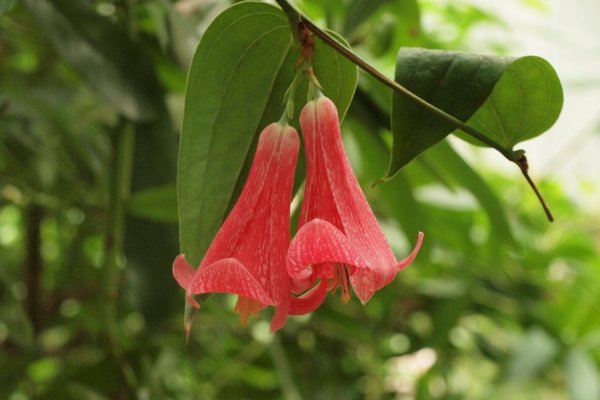
The lapageria is the national flower of Chile. There is a story about two secret lovers—Hues, the daughter of the Mapuche chief, and Copiha, the leader of the Pehuenche mountain tribe. On the orders of Hues’s enraged father, both were killed. When the people of both tribes reconciled and gathered for a funeral ceremony, they saw the blooming lapageria and named it copihue after the lovers.
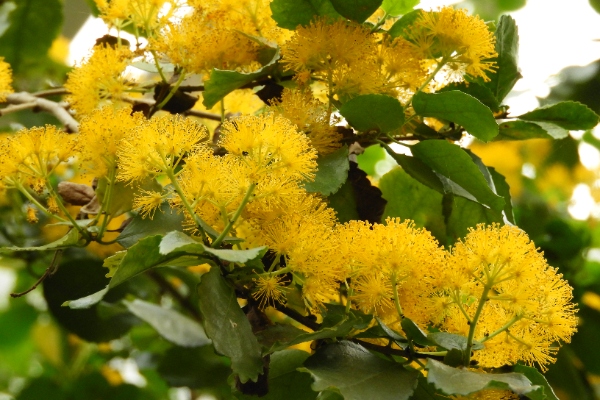
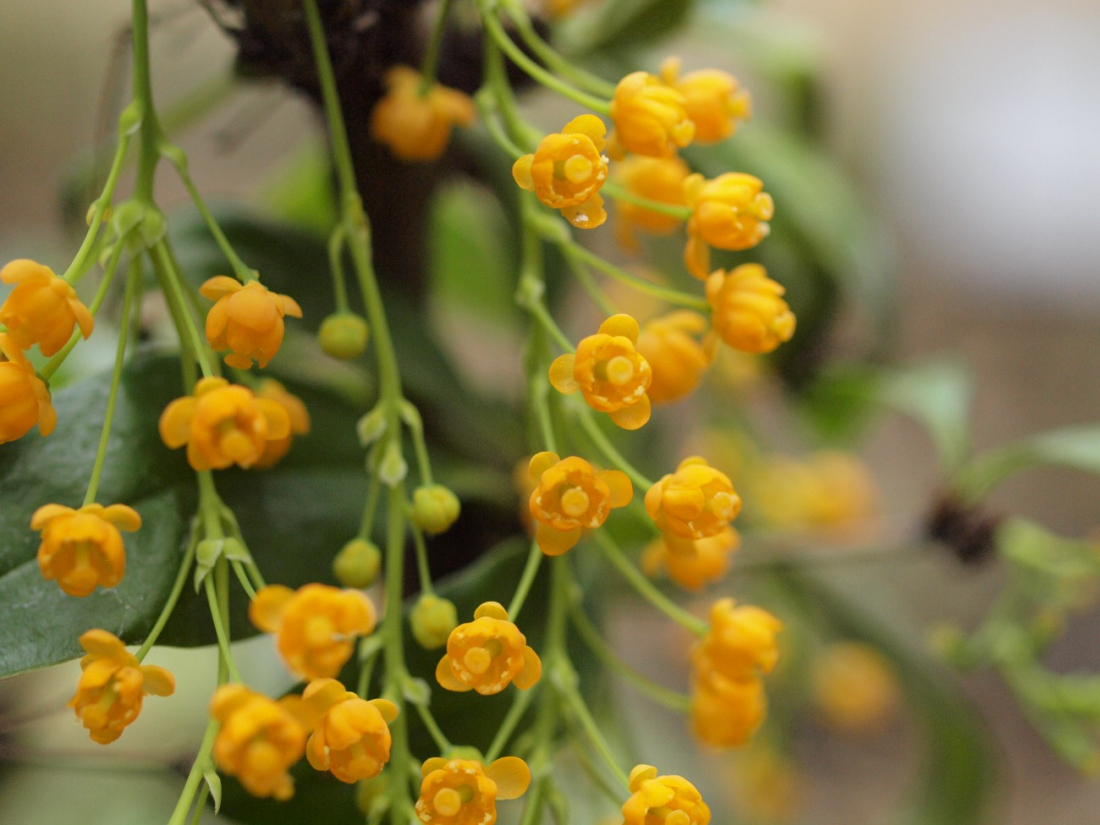
When we reach the very back, the farthest part of the subtropical greenhouse, we can see a profusely flowering Chilean shrub called Azara serrata on the right. At first glance, the striking yellow stamens protruding from the flower catch the eye, and they give off a scent reminiscent of a freshly prepared fruit salad.