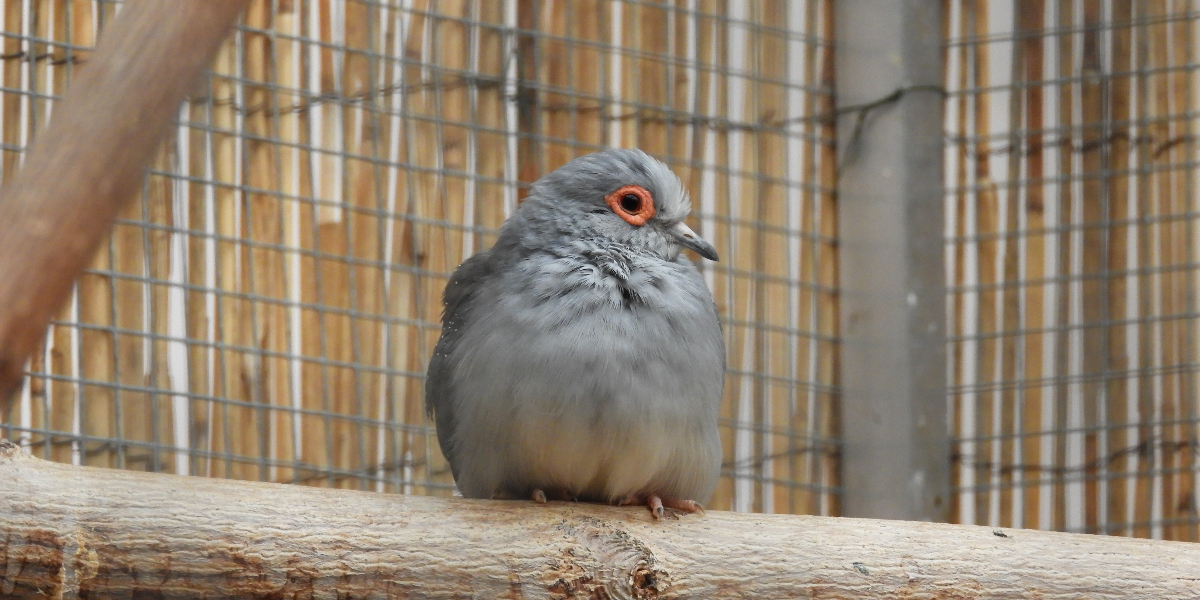
It features two representatives of Australian fauna. The diamond dove (Geopelia cuneata) is a smaller member of the soft-billed dove family native to Australia. It lives in pairs or small groups across the entire continent, with the exception of the southwest, always near water. Its typical habitat consists of acacia groves. Its diet consists primarily of seeds, though it does not shy away from insects. The zebra finch (Taeniopygia guttata) is among the most widespread species of estrildid birds in central Australia, though it is most abundant in grasslands with scattered trees and shrubs. Their diet consists mainly of seeds from various grains and grasses. They have been kept in captivity since the first half of the 19th century. Males have an orange cheek patch and a red beak, while females have an orange beak.
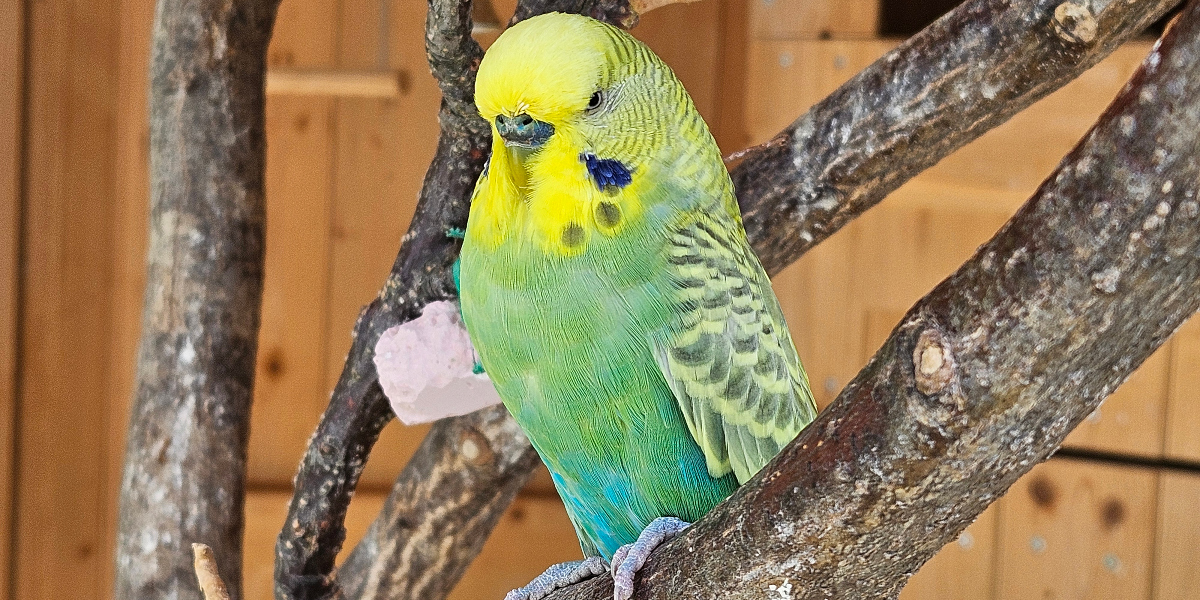
The outdoor exhibit houses budgerigars (Melopsittacus undulatus) native to the arid regions of Australia. The budgerigar was described in 1805 by the British naturalist George Shaw, and in 1840 it was brought to Europe by ship by the naturalist and bird painter John Gould. Since then, it has become the third most common pet (after dogs and cats). The Czech name “andulka” is a corruption of the Latin name undulatus, meaning “wavy.” In the wild, they gather in huge flocks to search for water and food. Their diet consists mainly of grass seeds, but they also eat the green parts of plants. During times of food abundance, mating occurs, and the female lays 4–6 eggs, which she incubates for 18–21 days. The chicks are naked and blind; their eyes open after ten days, and they leave the nest after five weeks. Adults typically live 5–10 years in the wild; in captivity, they live longer (up to 18 years). The adult male has a strikingly blue-colored cere, which is the soft, mostly featherless area located above the beak. The female’s cere is pink or brownish.