| Length | Width | Height | Area | Number of cultivated taxa | Daytime temperature | Nighttime temperature | Humidity | Number of gardeners |
|---|---|---|---|---|---|---|---|---|
| 36 m | 30 m | 6,5–14,2 m + 1 m | 1080 m2 | 590 | 21–31 ℃ | 18–26 ℃ | up to 85 % | 3 |
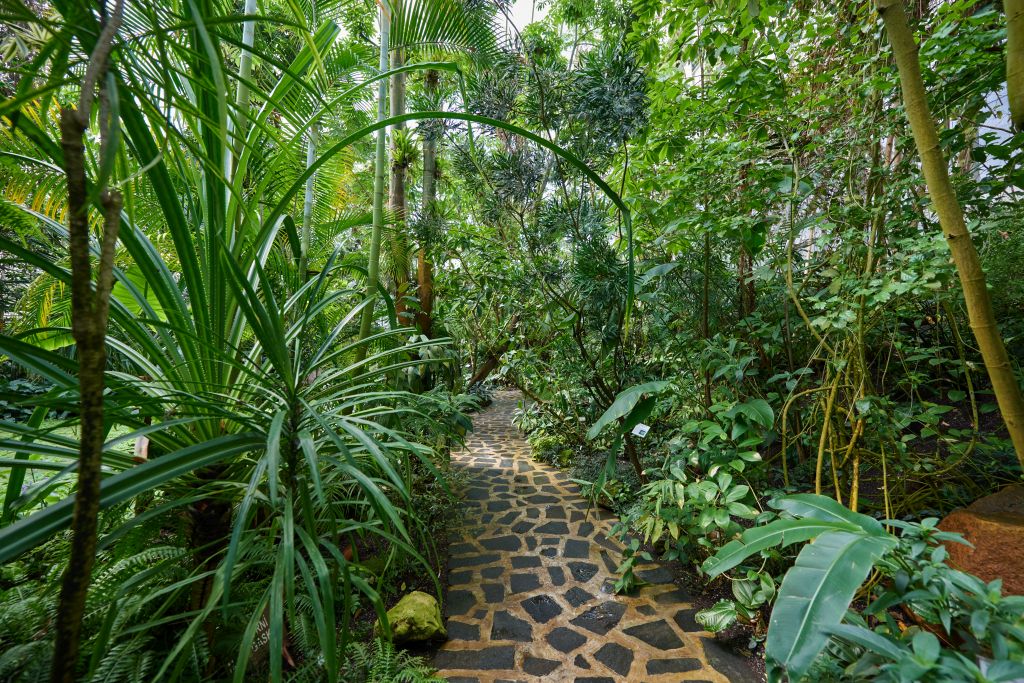
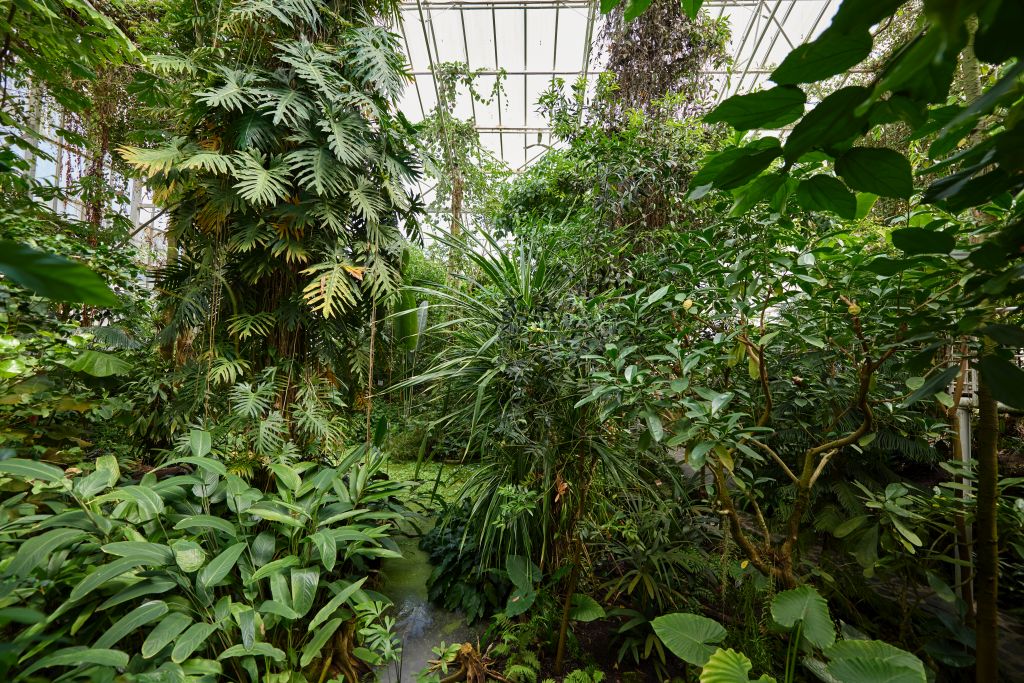
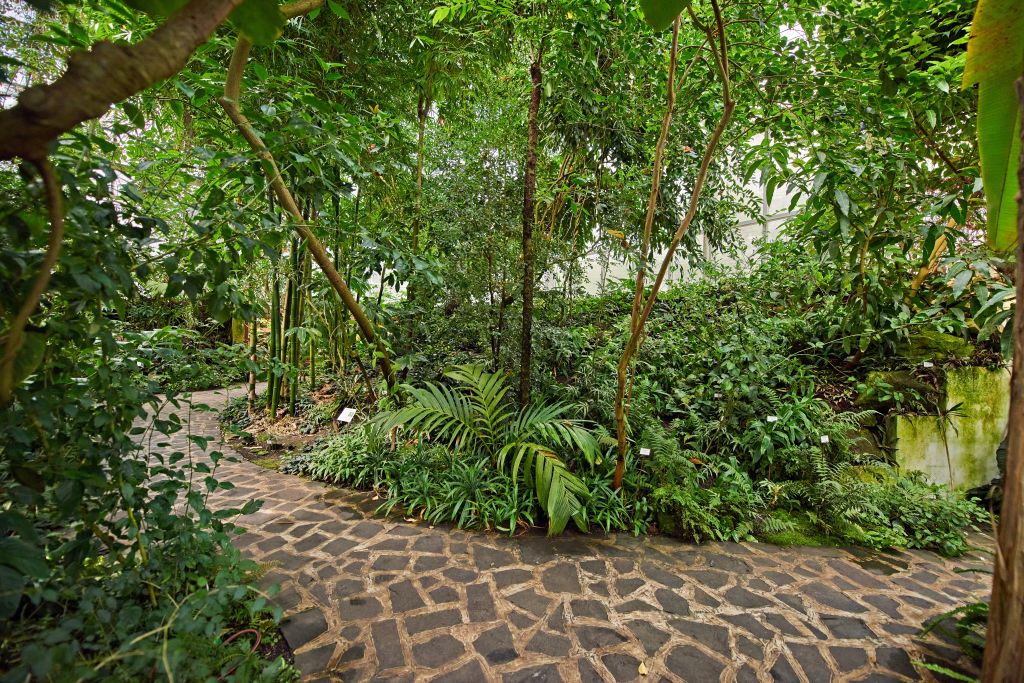
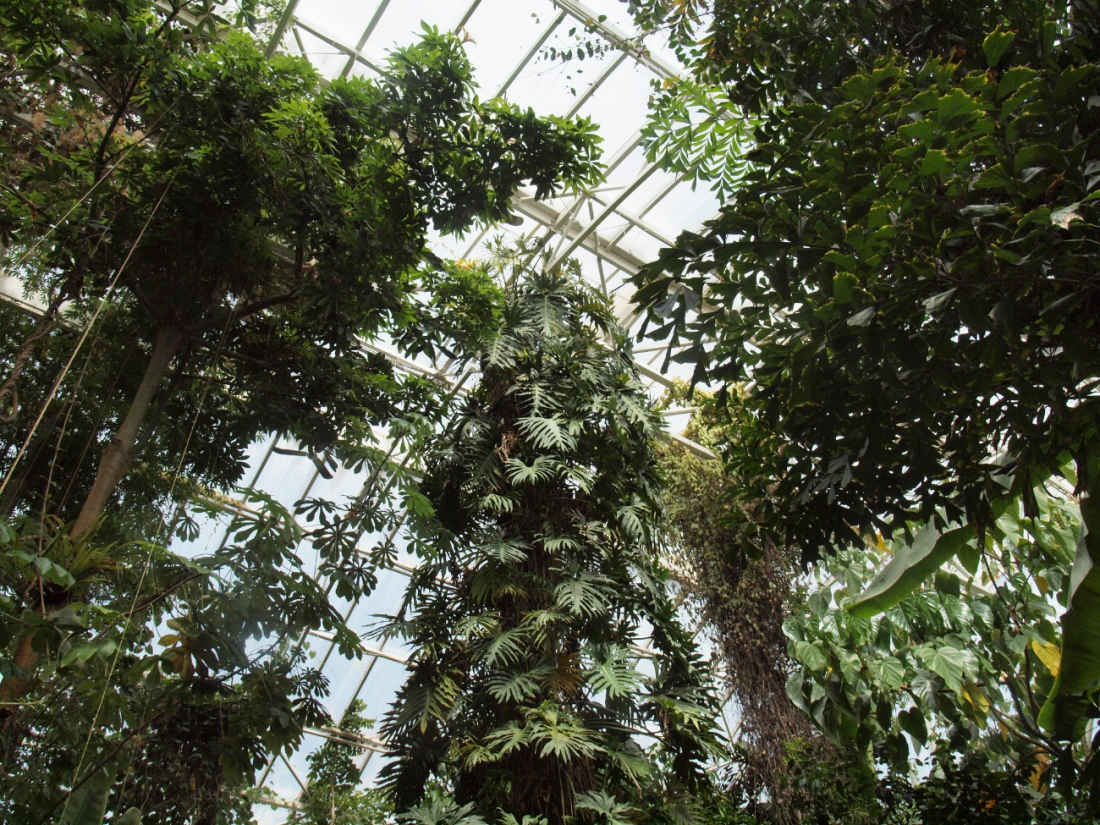
Tropical rainforests are located between the Tropic of Cancer and the Tropic of Capricorn. They cover only 2% of the Earth’s surface, but are home to as much as 50% of all species living on Earth. In the xeric greenhouse, you could see parts of tropical regions that experience shorter or longer periods of drought. In contrast, the tropical greenhouse is humid, and the vegetation is frequently drenched by rain. We primarily display plants from the equatorial climate, which features high temperatures year-round and regular rainfall, but we also have representatives of the tropical monsoon season, where two distinct seasons alternate—the wet monsoon season and the dry season.
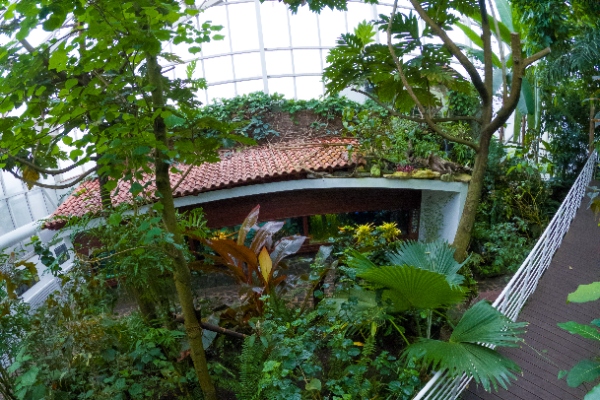
Islands and islets scattered throughout the Pacific Ocean—that is the Pacific. The origins of these islands vary; some were formed by volcanic activity, while others are of coral origin (so-called atolls). Plants reached these remote islands carried by the wind and ocean currents, attached to the feathers of birds, and, not least, through human activity. Notable cultivated specimens in our garden include two stately specimens of the breadfruit tree (Artocarpus altilis) and the Hawaiian crimson tree (Erythrina sandwichensis).
The most distant continent for residents of the Czech Republic. Australia was part of the supercontinent Gondwana, which gradually broke apart. Not only did New Zealand break away from Australia, but so did New Caledonia, which is often called the “Mecca of botanists” due to the uniqueness of its flora. Thanks to the islands’ isolation from the surrounding mainland, a unique biota (both fauna and flora) has developed there. Australia’s tropical rainforests are located in a narrow strip along the coast of the country’s northern and northeastern tip.
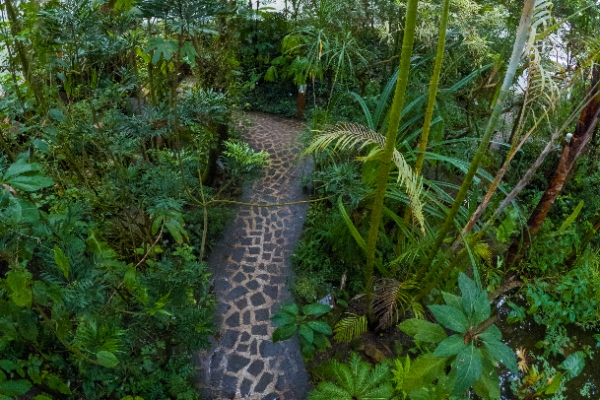
In botanical gardens, Africa’s tropical rainforests are often overlooked and do not receive as much attention as those in South America or Asia. Tropical rainforests are found in central Africa and, in particular, in its western part. They cover an area of 3.6 million km² (for comparison, the Czech Republic is 46 times smaller). This region is home not only to rare plant species but also to iconic animals such as the lowland gorilla (Gorilla gorilla gorilla) and the chimpanzee (Pan troglodytes).
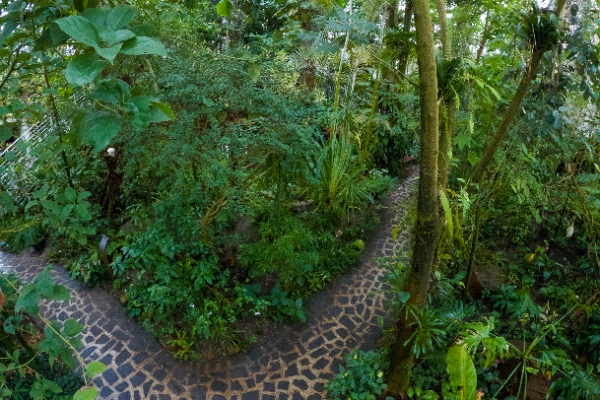
In the tropical greenhouse, we also showcase the wetter regions of the unique island of Madagascar. Rainforests are found primarily in the eastern part of the island, though rainfall is not evenly distributed throughout the year and increases toward the north. The wettest area is the Masoala Peninsula, where up to 6,000 mm of rain falls annually. Madagascar’s tropical rainforests are lighter in color and feature a richer, more developed herbaceous and shrub layer.
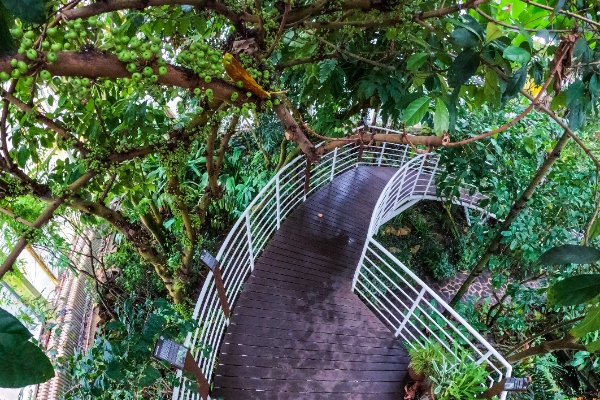
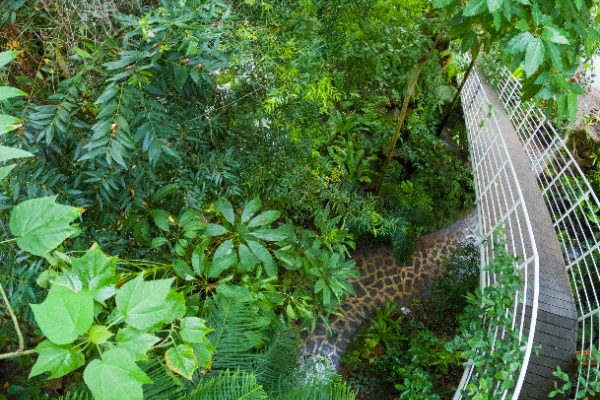
The oldest tropical rainforests are found in Southeast Asia (their age is estimated at over 100,000 years). Together with the tropical rainforests of Africa, they are collectively referred to as the Paleotropics (the tropics of the Old World). A significant portion of the plants comes from collections gathered by Jiří R. Haager in Vietnam. Two streams flow through the exhibit, along with a waterfall created by Teplice artist Milan Žofka (1946–2018), and a footbridge spans the entire exhibit.
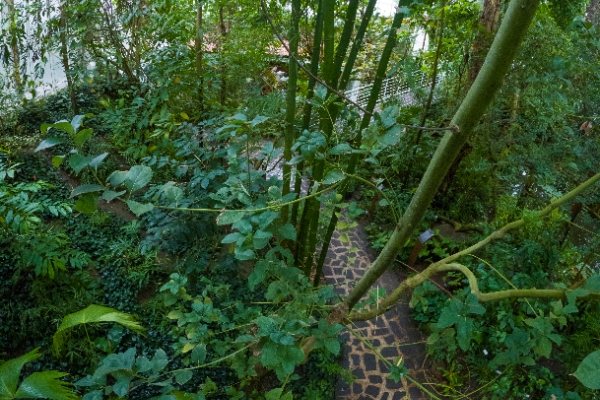
The original name and concept for this section of the exhibition were devised by the garden’s former director, Jiří R. Haager, who listed a few useful plant species that visitors might recognize from crossword puzzles but have no real idea what they actually look like. This exhibit is therefore not organized geographically, but rather brings together significant useful plants from all tropical regions. Many other useful plants, however, can be found throughout the greenhouse.
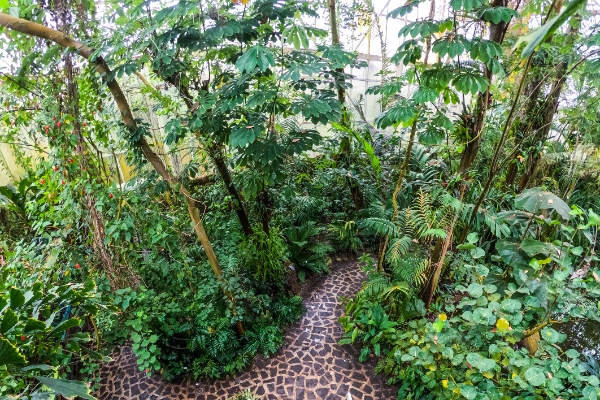
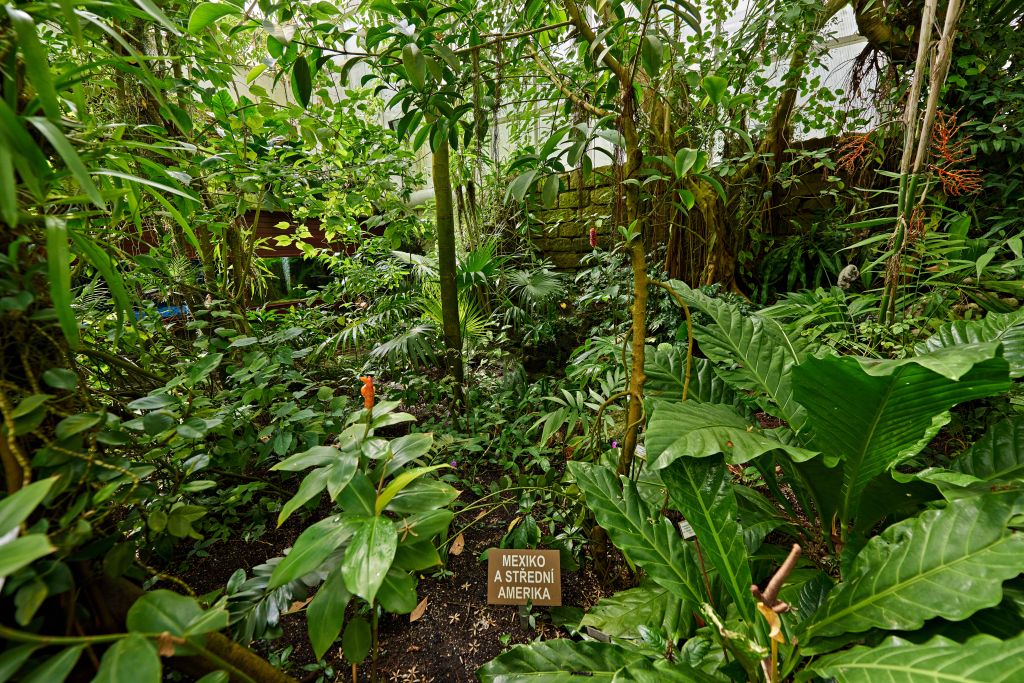
The bridge between North and South America: that is Central America, home to equally significant areas of tropical rainforests. In a certain sense, Central America does not exist, and these areas are classified as part of South America. The local flora and fauna were shaped by the connection of the two continents 2.8 million years ago, when the Isthmus of Panama was formed. This section of the greenhouse is enlivened by the ruins of a Mexican pyramid, which is gradually being swallowed up by the expanding jungle.
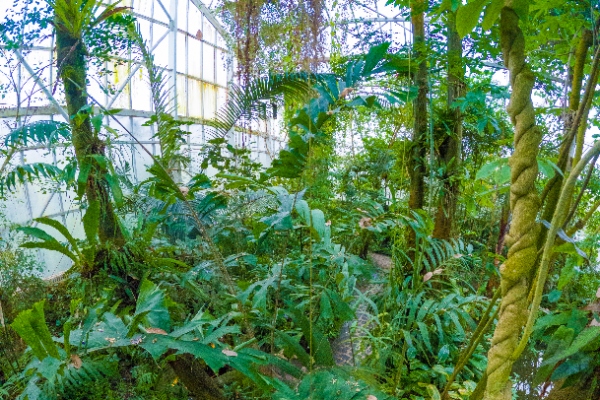
The Amazon Rainforest boasts several "firsts"—it is the best-known, largest, but also the most endangered tropical forest in the world. It spans a total of nine South American countries and covers an area of approximately 5.5 million km². Other significant forests are found along the coast of Brazil, such as the Atlantic Forest. Since the American continent is called the New World, its tropical regions are also grouped under the collective name Neotropics (the tropics of the New World).
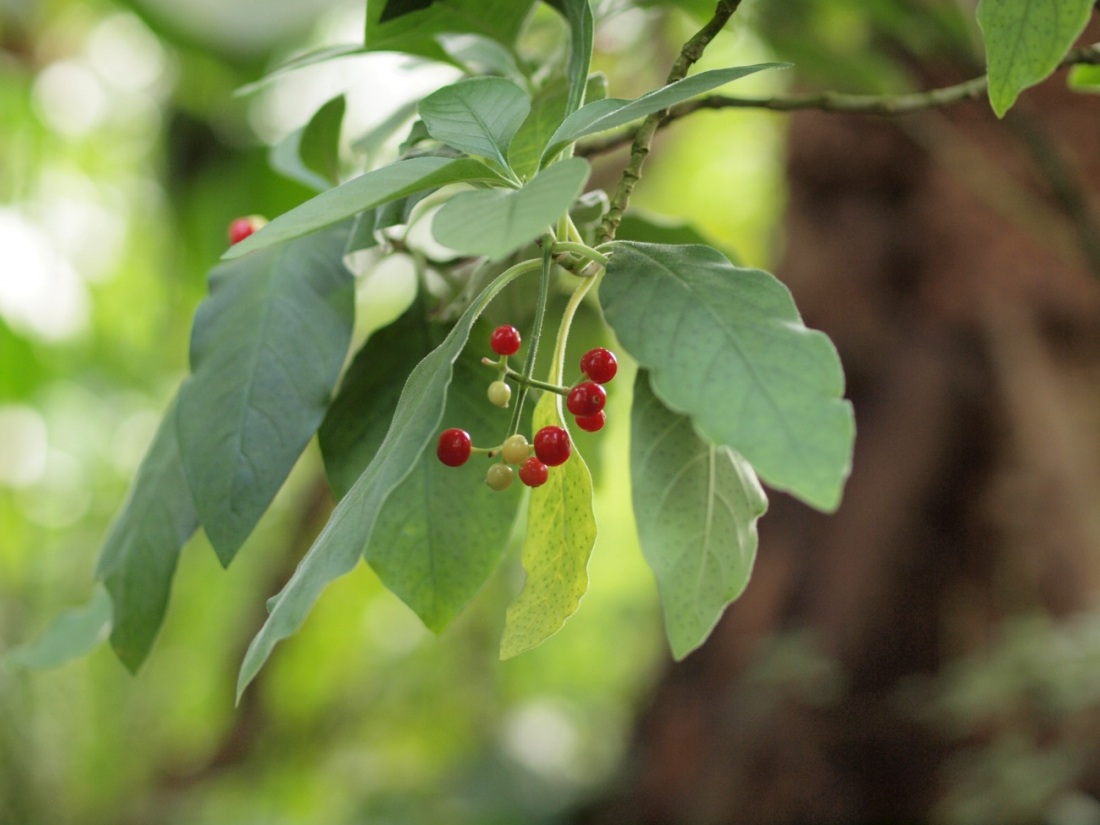
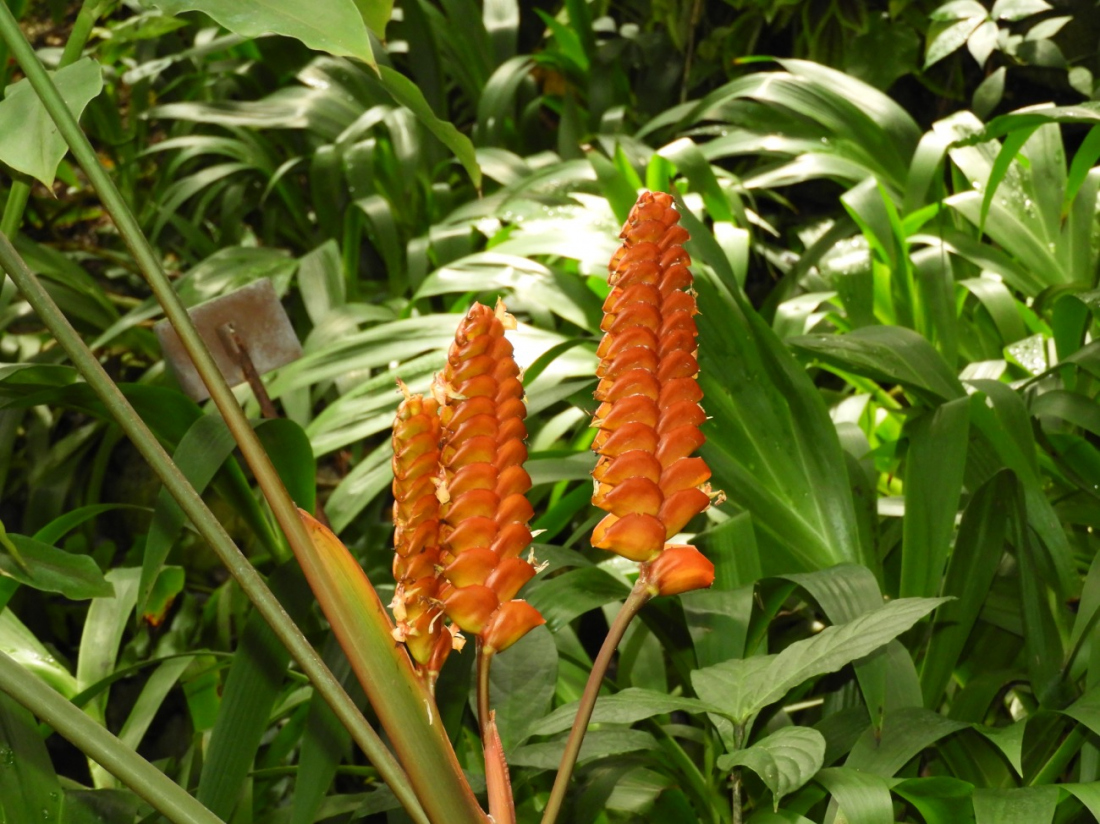
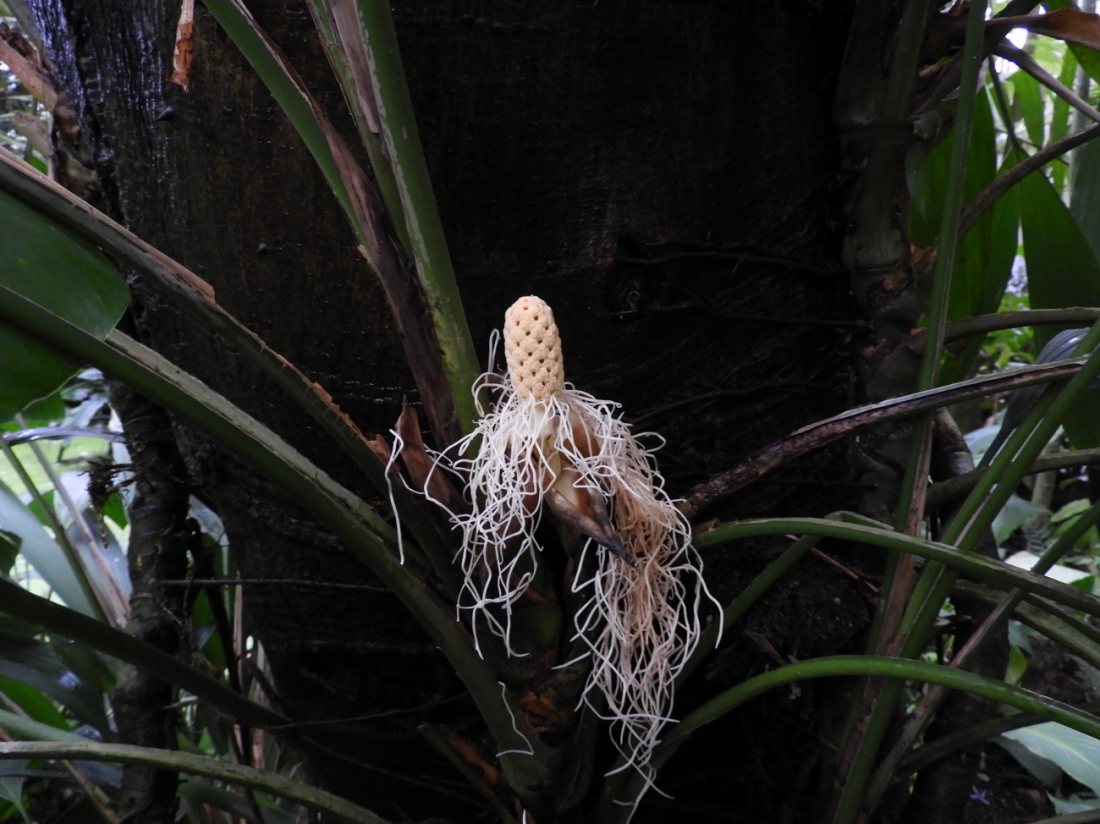
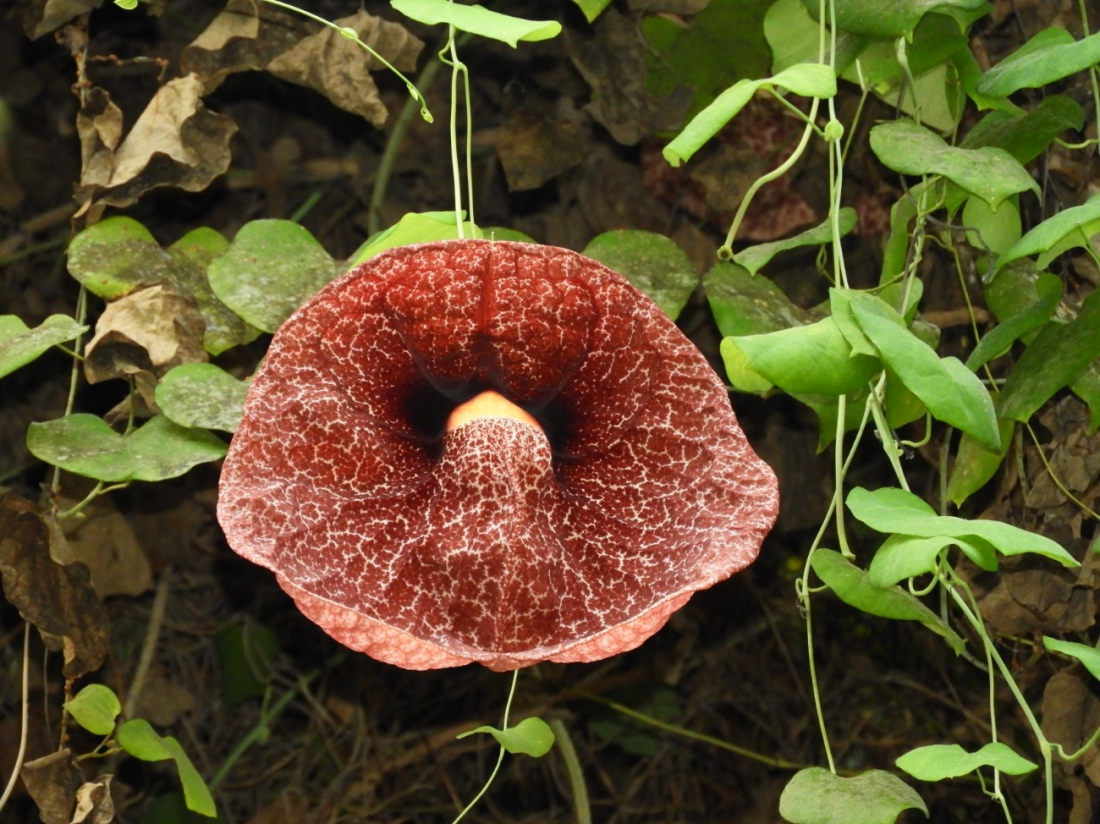
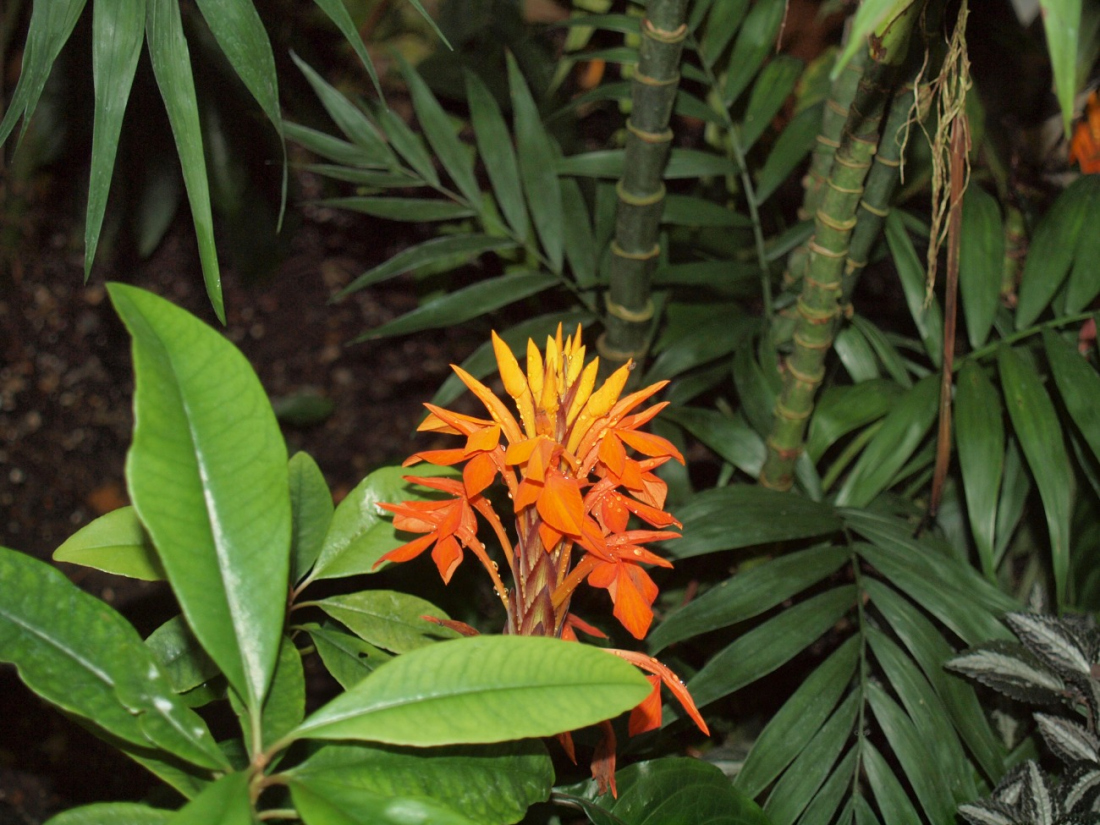
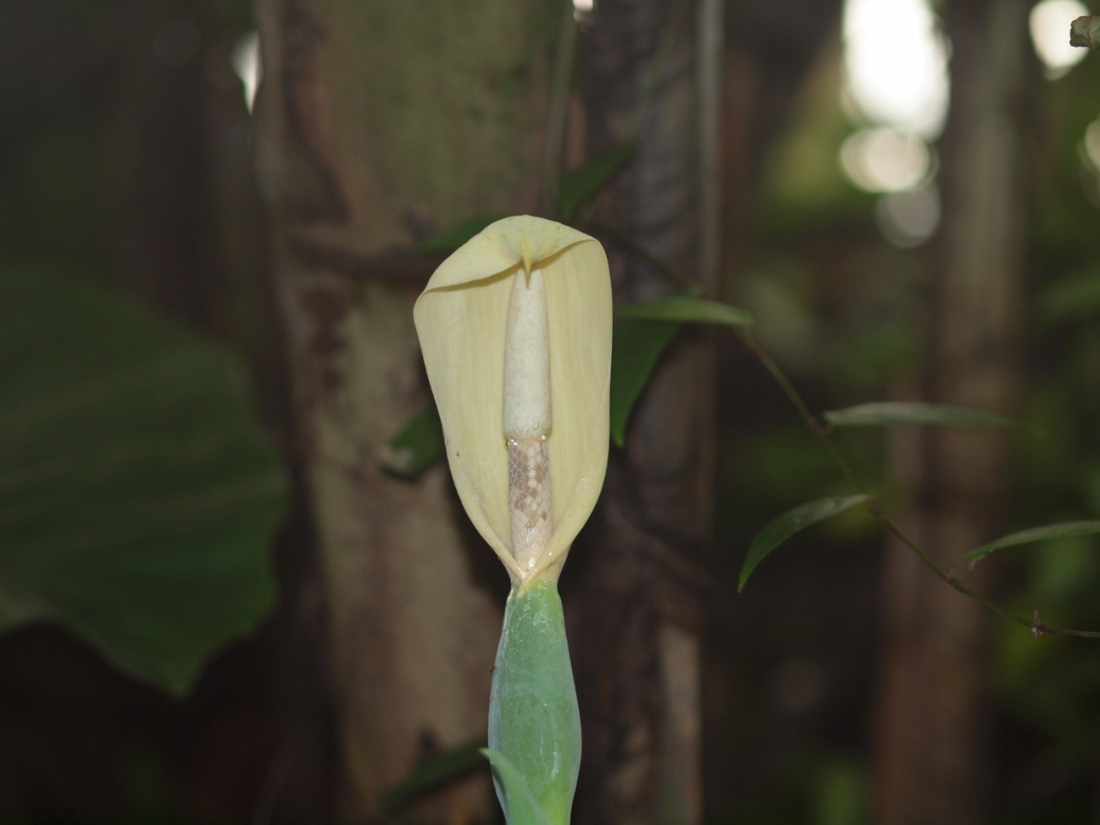
And who are the biggest "stars" of our tropical greenhouse? Here’s a random selection from the 590 taxa we grow.
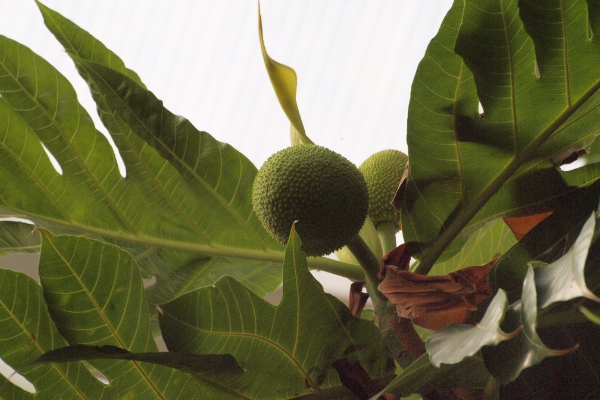
The breadfruit tree is one of the most productive plants; in a single season, it can yield 50 to 150 fruit clusters weighing between 0.25 and 6 kg, depending on the conditions in which the tree is grown. The fruit is known as breadfruit and can be eaten raw or cooked.
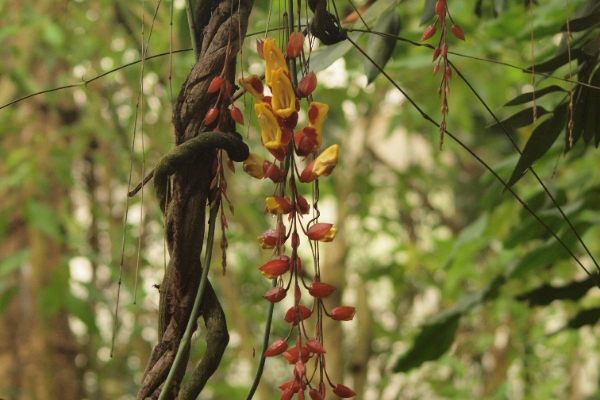
A beautiful example of how plants adapt to their pollinators. This can be seen in a vine native to southern India. It is called Thunbergia mysorensis, and its flowers produce a large amount of nectar. Together with their red-and-yellow color, they attract stridimylids. The stamens and stigma are positioned so that the pollen load is transferred to the pollinator’s head, which then carries this precious material to the next flower.
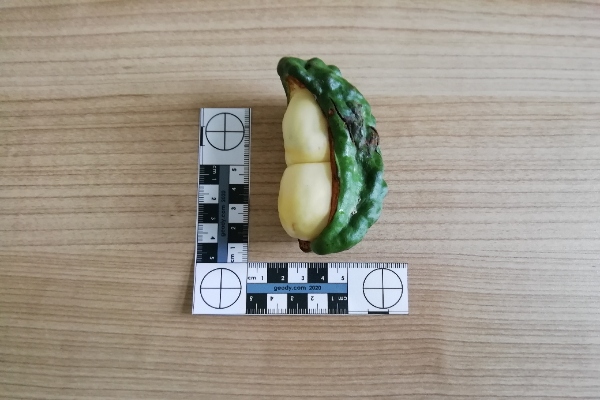
In our African garden bed, we grow the cola tree (Cola anomala), which has been blooming regularly in the winter since 2021 and, in 2023, bore fruit for the first time in the form of an elongated pod containing two seeds ("cola nuts"). The seeds are used in pharmaceuticals to produce stimulants, and it is easy to find ground kola nuts in health food stores.
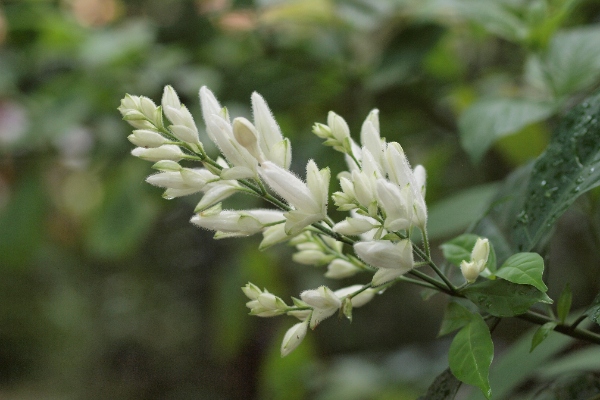
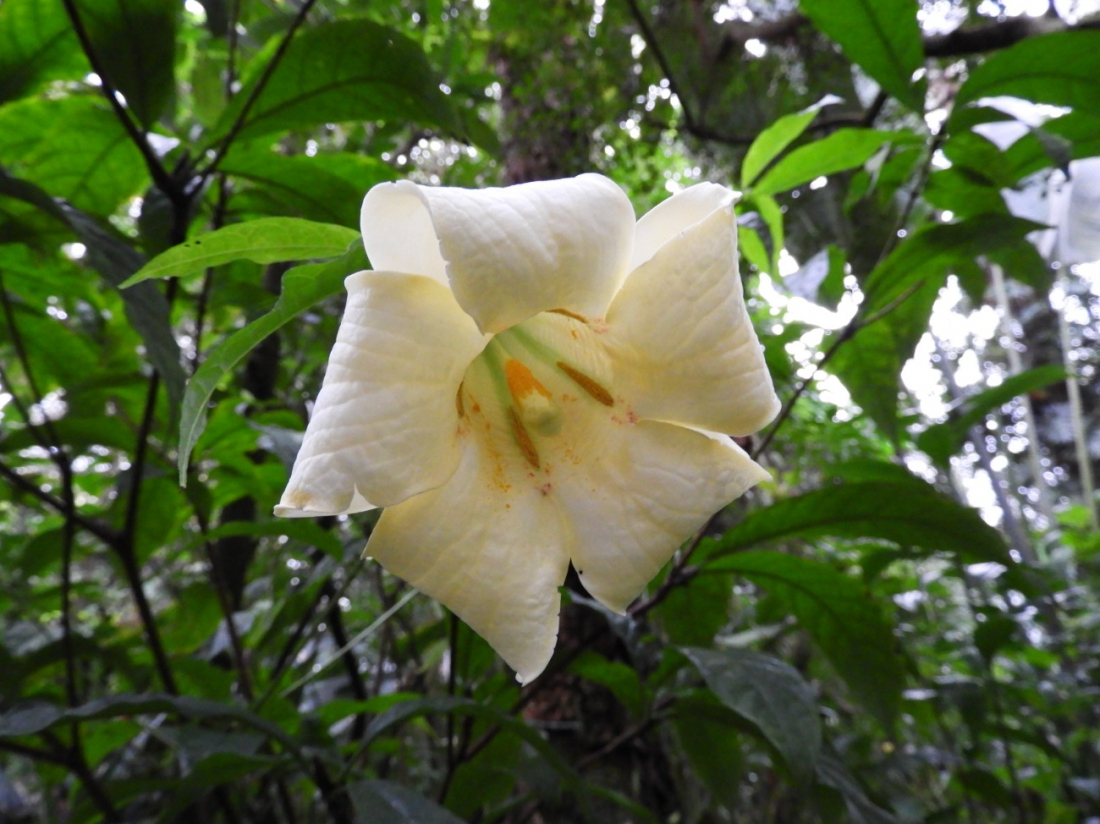
This beautifully white-flowering shrub, Whitfieldia elongata, originates from tropical Africa—which is one reason why it is called "white candles" in English. It was named in honor of the English botanist and collector Thomas Whitfield, who worked in The Gambia and Sierra Leone.
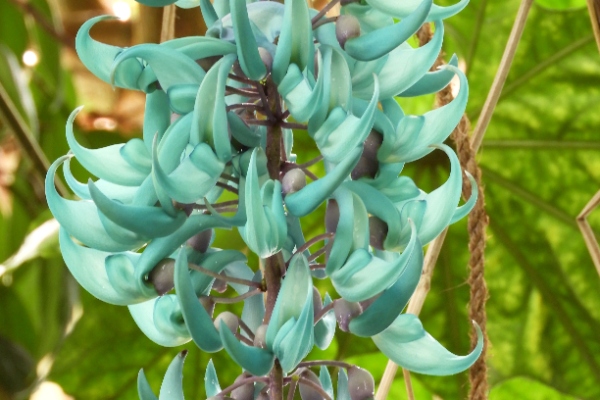
The emerald vine, Strongylodon macrobotrys, is native to the Philippine islands of Luzon, Mindoro, and Catanduanes. There are likely more specimens in botanical gardens than in the wild, where this species is threatened by rainforest deforestation. There are 14 species in the genus, but most of them do not have flowers with such striking colors.
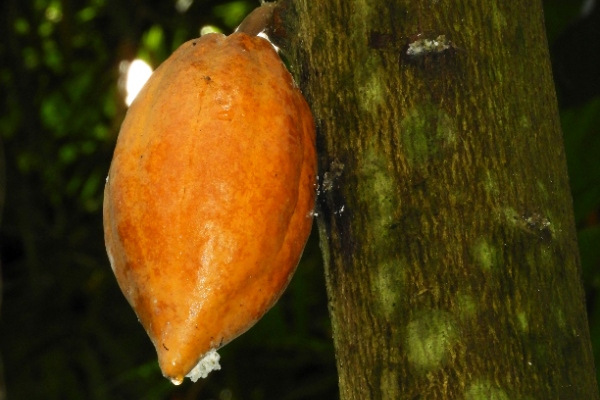
Undoubtedly the most popular plant for children—after all, without the cacao tree, there would be no chocolate. It originates from Central and South America, but the largest cocoa producers are found in West Africa (in 2022, these were Ivory Coast and Ghana). The cacao tree is a good example of cauliflory, or flowering on the trunk. The fruit is a berry containing up to 60 seeds (cacao beans).
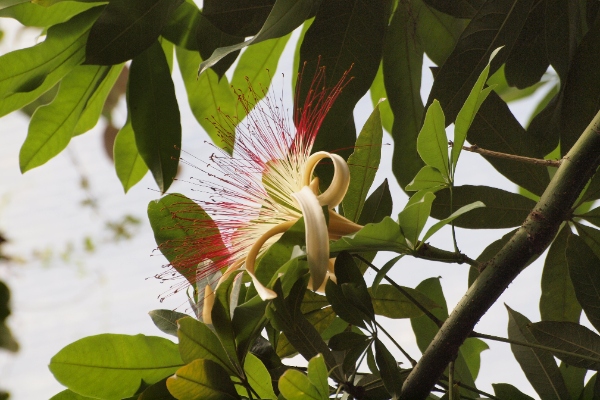
Need some money? Get a money plant for your home! According to Eastern legends, this plant can attract money (it’s called a “money plant” in English). A poor man prayed for money and found this plant. He took it home as a sign, and by selling the plants he grew, he made a large sum of money.
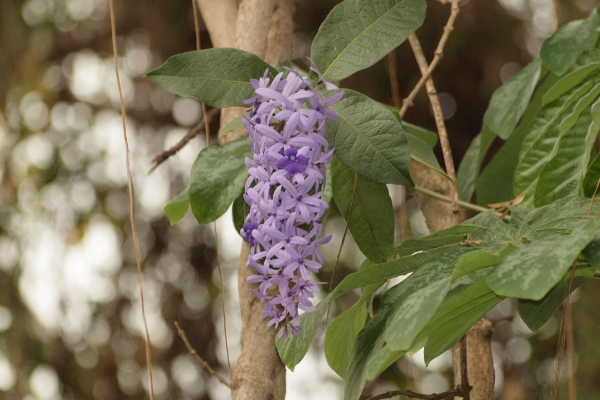
As you walk through the tropical greenhouse, you may spot fallen flowers and seeds on the ground, surrounded by a persistent calyx, drifting down like parachutes from above. To catch a glimpse of the plant from which these “parachutists” are descending, you’ll need to look up and search.