| Length | Width | Height | Area | Number of cultivated taxa | Summer temperature | Winter temperature | Humidity | Number of gardeners |
|---|---|---|---|---|---|---|---|---|
| 18 m | 12 m | 5 m | 216 m2 | 440 | ± outdoor temperature | 2–5 ℃ | ± outdoor | 1 |
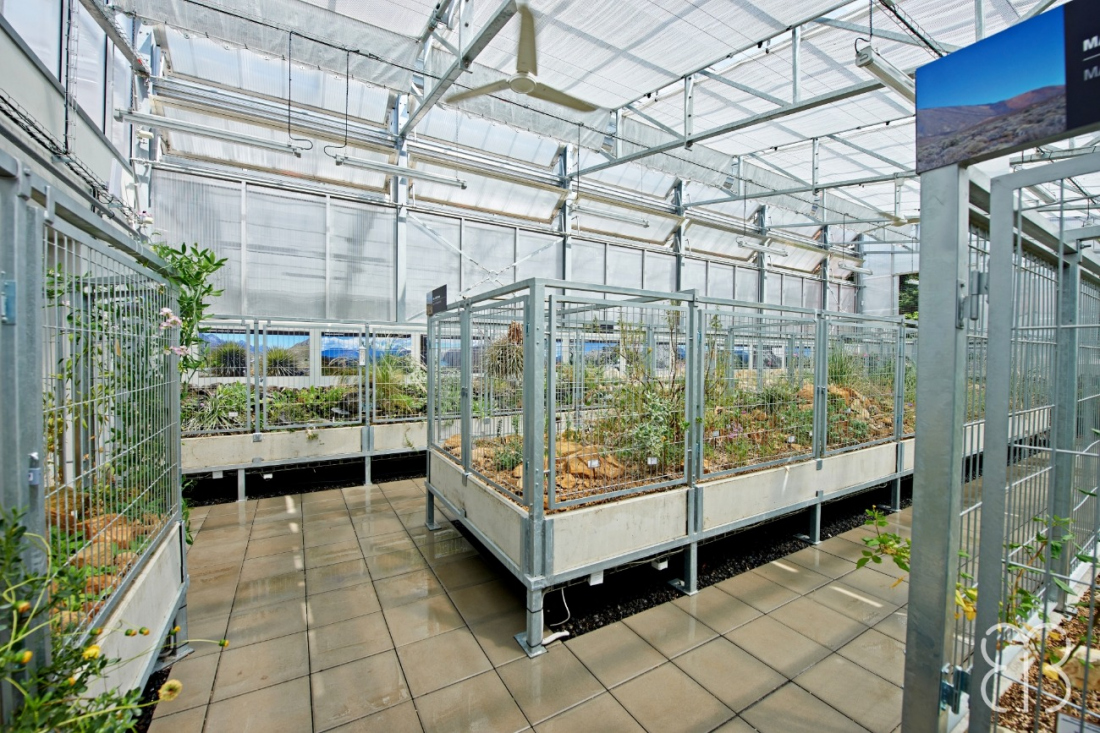
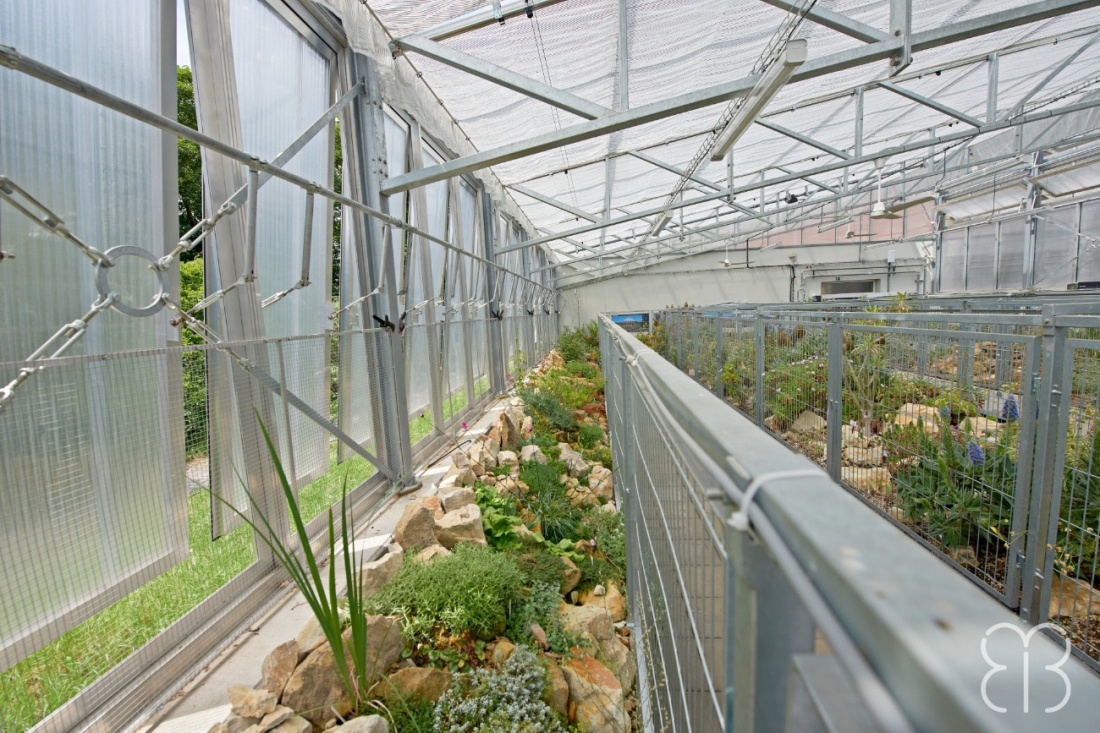
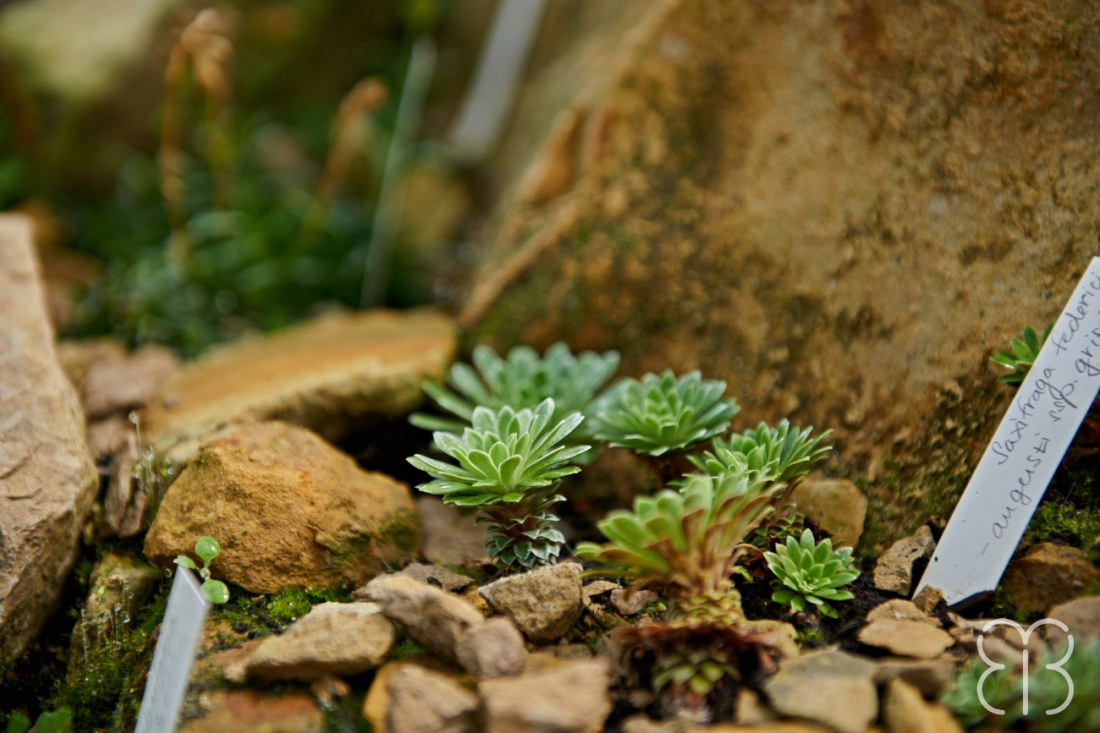
The newest and smallest structure in the entire Tropicana greenhouse complex is the rock garden greenhouse, which showcases delicate species of alpine plants from around the world, particularly from South America and Chile. The plan to build the rock garden greenhouse dates back to 2015 and was conceived by the then-director, Jiří R. Haager. He was inspired by the greenhouses at the botanical garden in Innsbruck, which was the destination of one of his business trips. Construction began on April 30, 2018, and the complex was completed on November 21, 2018, when preparations for the exhibition and the first plantings began.
.jpg)
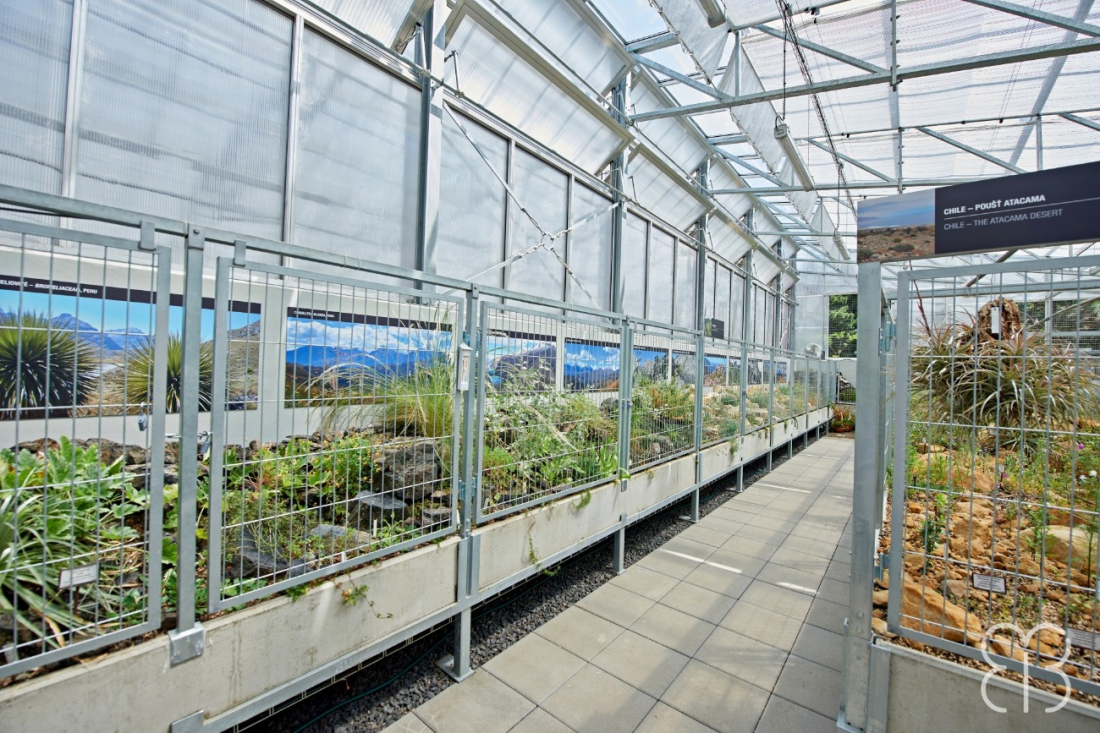
In the northwest of the South American country of Chile lies one of the driest places on Earth—the Atacama Desert—which stretches 1,600 km and extends west of the Andes to the Pacific coast. The defining climatic factor is the cold Humboldt Current, which is responsible for the low total rainfall. In terms of moisture supply, the coastal vegetation must make do with only the thick fogs coming in from the sea (a specific type of vegetation known as lomas has developed here, which is dependent on the camanchacas fogs).
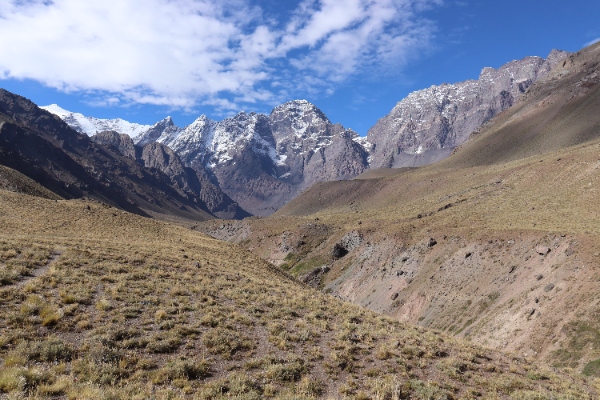
The long chain of the Andes stretches along the eastern border between Chile and Argentina; it was formed roughly 20 million years ago. Chile’s flora includes nearly 5,000 plant species, and up to 45% of them are found nowhere else in the world (they are endemic). The Andes mountain range acts as a barrier to the westerly currents that bring clouds from the cold Pacific Ocean.
.jpg)
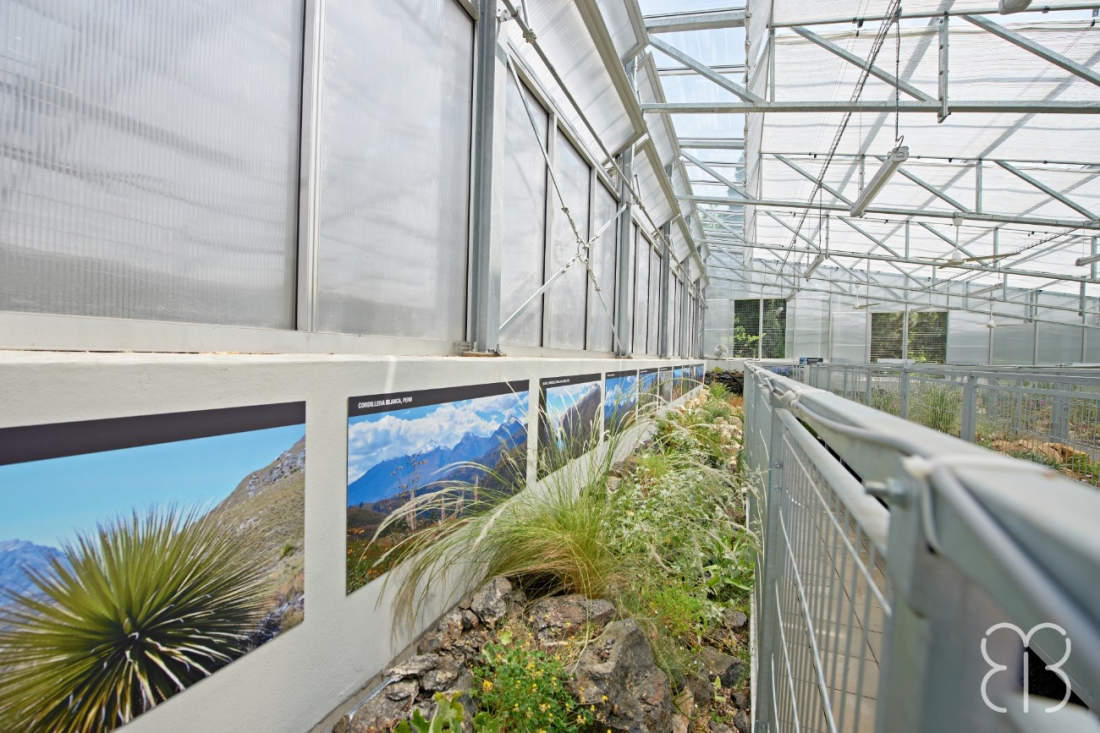
With a length of 7,240 km and a width ranging from 200 to 700 km, the Andes are among the longest mountain ranges in the world. The Andes stretch from Panama along the western coast of South America all the way to Tierra del Fuego at the very southern tip of the continent. In this section of the exhibition, we focus primarily on plants from Peru and Bolivia—countries that are home to the world’s second-largest plateau, the Altiplano.
.jpg)
In the eastern Atlantic Ocean lie four island groups of volcanic origin, collectively referred to as Macaronesia. From north to south (from the youngest to the oldest islands), these are the Azores, Madeira, the Canary Islands, and Cape Verde. The long-term isolation of these islands from the mainland has led to the development of a large number of endemic plants (up to 30% of species) that grow nowhere else in the world.
.jpg)
The mountainous regions of Southern Europe primarily include the mountain ranges of the Balkan, Apennine, and Pyrenean peninsulas. These mountain ranges were formed during the Tertiary period by the Alpine-Himalayan orogeny. Snow lies on the peaks for up to nine months of the year, and intense, heavy afternoon thunderstorms are common.
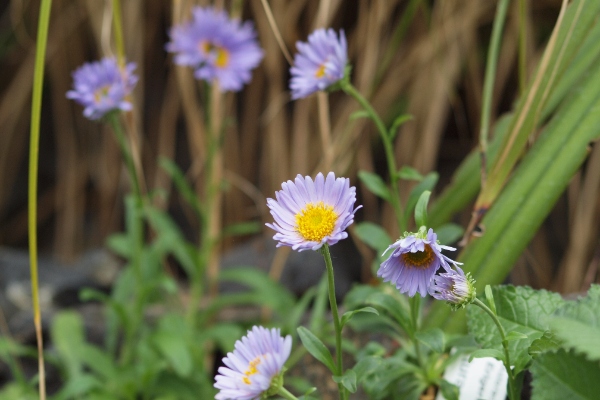
From Europe, we can now turn our attention to Asia. The Taurus Mountains in Turkey, the Greater and Lesser Caucasus in Southwest Asia, and the Himalayas—the world’s highest mountain range—are home to a unique flora of alpine plants. Genera such as primrose (Primula) and saxifrage (Saxifraga) are most widely distributed here. Growing these alpine plants is not easy, as they do not tolerate our winters well and rot due to excessive winter moisture. Better cultivation results are achieved specifically in a rock garden greenhouse.
.jpg)
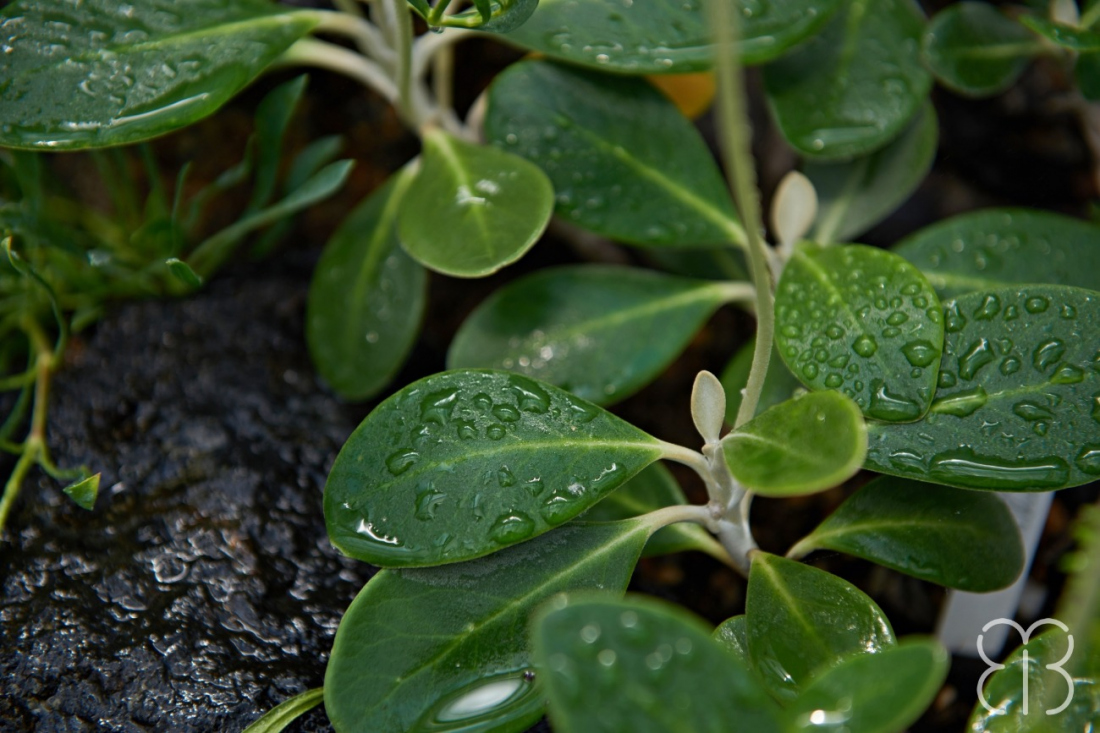
The Southern Alps mountain range, with its highest peak, Mount Cook (3,724 m above sea level), stretches across New Zealand’s South Island. Approximately 25% of the species are found in the alpine zone above the upper tree line, featuring alpine grassland vegetation that transitions into a shrub zone at lower elevations. A small waterfall dominates a short section of the New Zealand mountains, increasing the humidity in the surrounding area. Small species of the genera Podocarpus (Podocarpaceae) and Hebe (Plantaginaceae) have been planted.
.jpg)
The Central European region includes two major mountain ranges. The first is the Alps, the birthplace of rock garden cultivation among gardeners, which, thanks to its diverse bedrock composed of acidic and calcareous rocks, is home to a unique flora. Another major European mountain range is the Carpathians, which begin in neighboring Slovakia, extend into Ukraine, and end in Romania.
.jpg)
The mountainous regions of North America are home to an incredible wealth of plants, some of which have also found their way into our gardens. Among the popular rock plants is the genus Townsendia (Asteraceae), which is definitely worth noting. Examples include Townsendia eximia, with its lavender-colored flowers, and T. parryi, with its blue-green rosettes of leaves and violet ligulate flowers featuring a distinctive yellow center. These plants do not tolerate prolonged winter dampness well, making a rock garden greenhouse an ideal location for them.
.jpg)
And who are the biggest "stars" of our rock garden greenhouse? Here are some highlights from the 440 taxa we grow.
.jpg)
The remarkable Calceolaria genus (Calceolariaceae), whose 268 species grow from Tierra del Fuego to Mexico. To name a few, we have Calceolaria biflora, with its multi-flowered raceme-like inflorescence; C. cana, a Chilean endemic with pink, speckled flowers; C. corymbosa; and C. filicaulis.
.jpg)
Of the thirty species in the Puya genus, Puya berteroniana is one of the largest found in Chile. Other taxa from this extensive genus on display include P. alpestris, P. coerulea var. monteroana, P. chilensis, and P. venusta. Other Chilean bromeliads are also on display—for example, Deuterocohnia chrysantha and Ochagavia carnea.
.jpg)
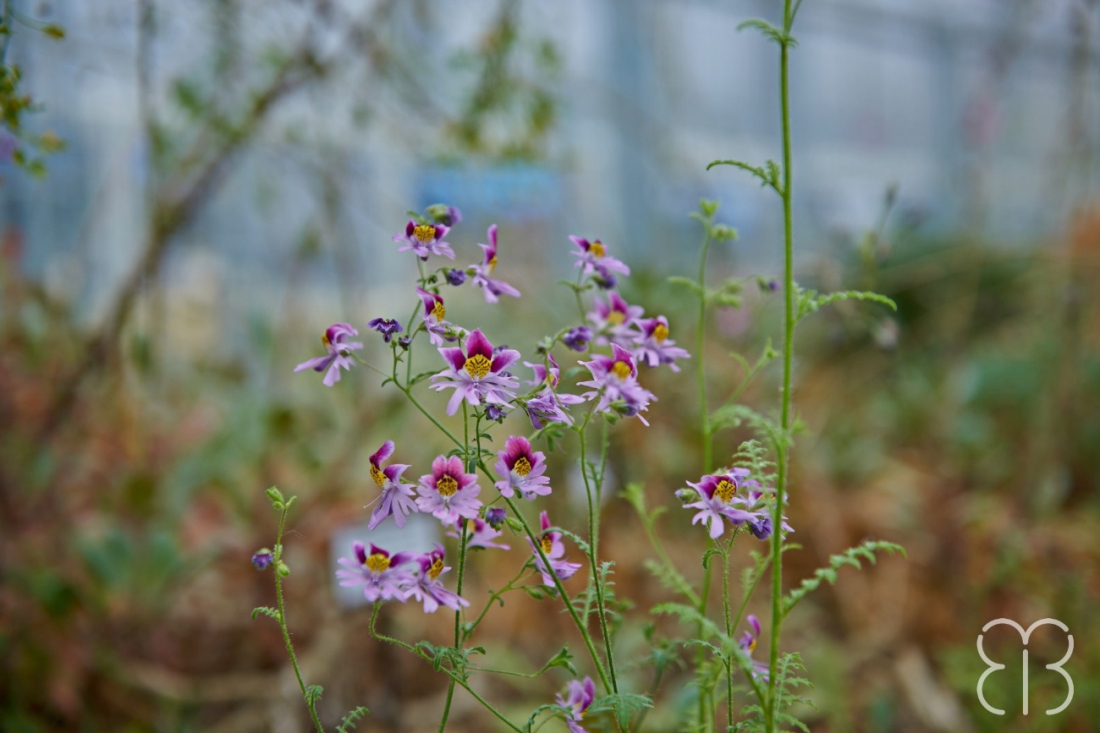
Schizanthus, also known as the split-flower, belongs to the nightshade family (Solanaceae). These are short-lived herbs that are grown as annuals in our climate. A total of fourteen species originate from Chile and western Argentina. The alkaloids (schizantines) contained in the plant are used by indigenous peoples in the Chilean Andes as a stimulant.
.jpg)
The genus Nolana comprises 89 species found exclusively in the desert regions of northern Chile and southern Peru. It grows in loma vegetation communities, where its growth depends on the camanchaca (a term used in Chile) or garúa (a term used in Peru), a mist that drifts in from the sea. Previously, the genus was classified in a separate family, Nolanaceae, but recent studies have shown that it belongs to the nightshade family.
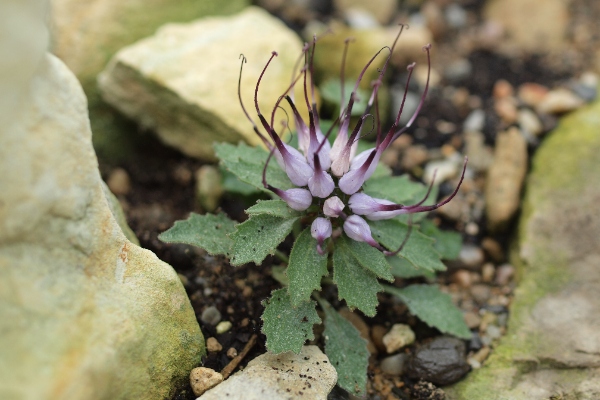
The crested bellflower is endemic to the southeastern Alps, where it grows in crevices in limestone cliffs. The individual flowers are bottle-shaped and range in color from pink to purple. It is nicknamed "the devil's claw." It colonizes narrow crevices and cracks between rocks.
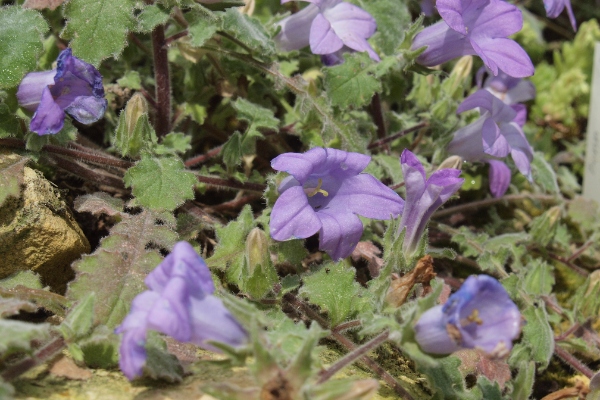
This bellflower, formerly known as Campanula thessala, is native to the rocky mountainous regions of central Greece. It grows much better in sheltered locations or in greenhouses, where humidity can be controlled. Its pink to dark purple tubular flowers attract bees, butterflies, and other insect pollinators.