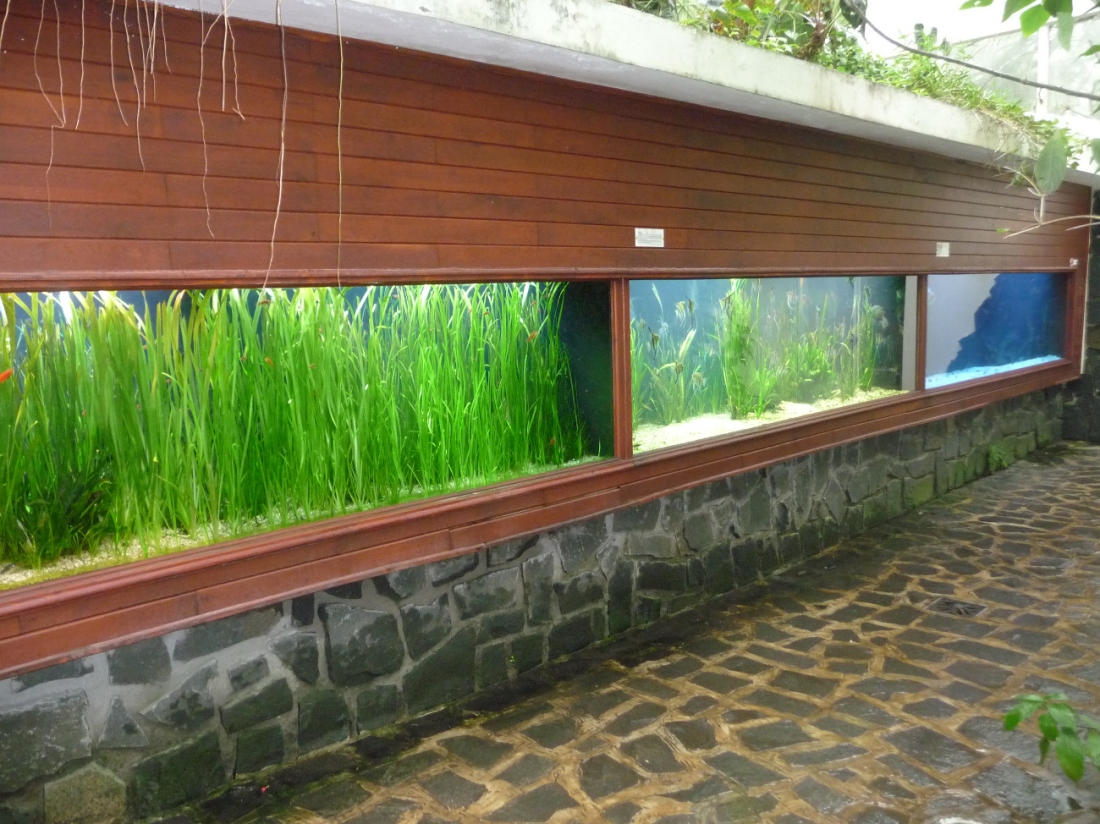
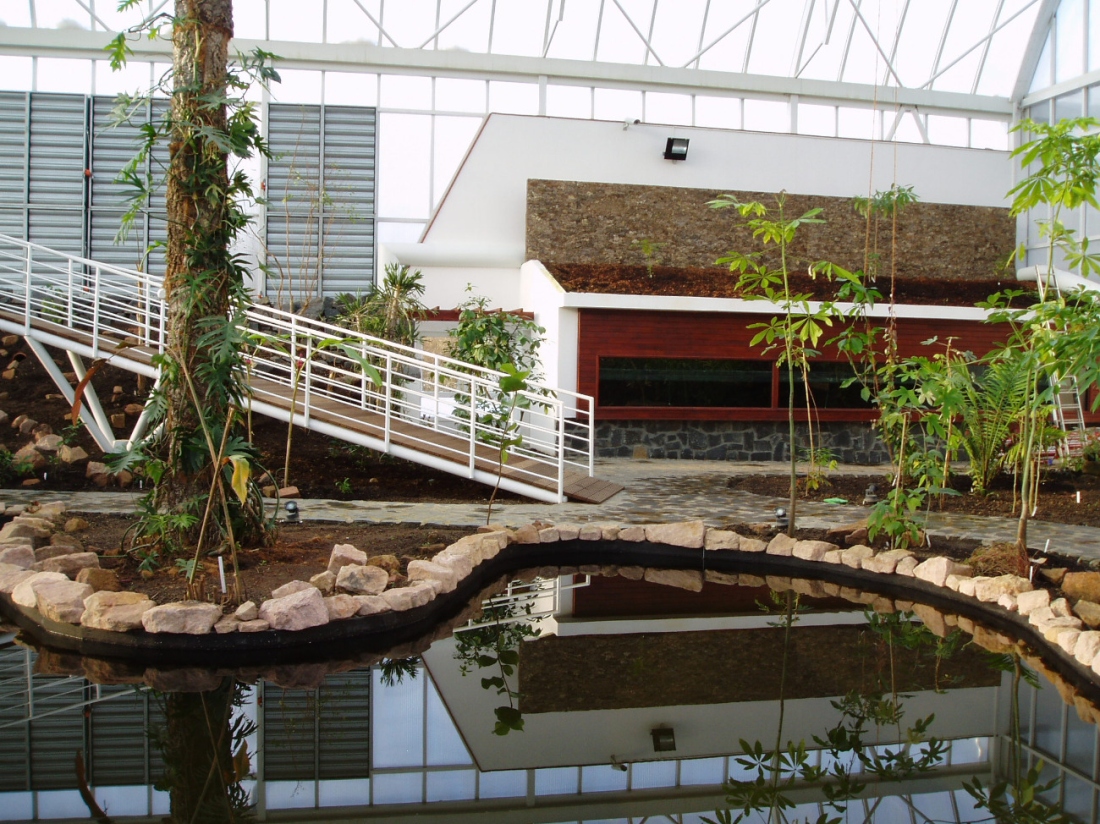
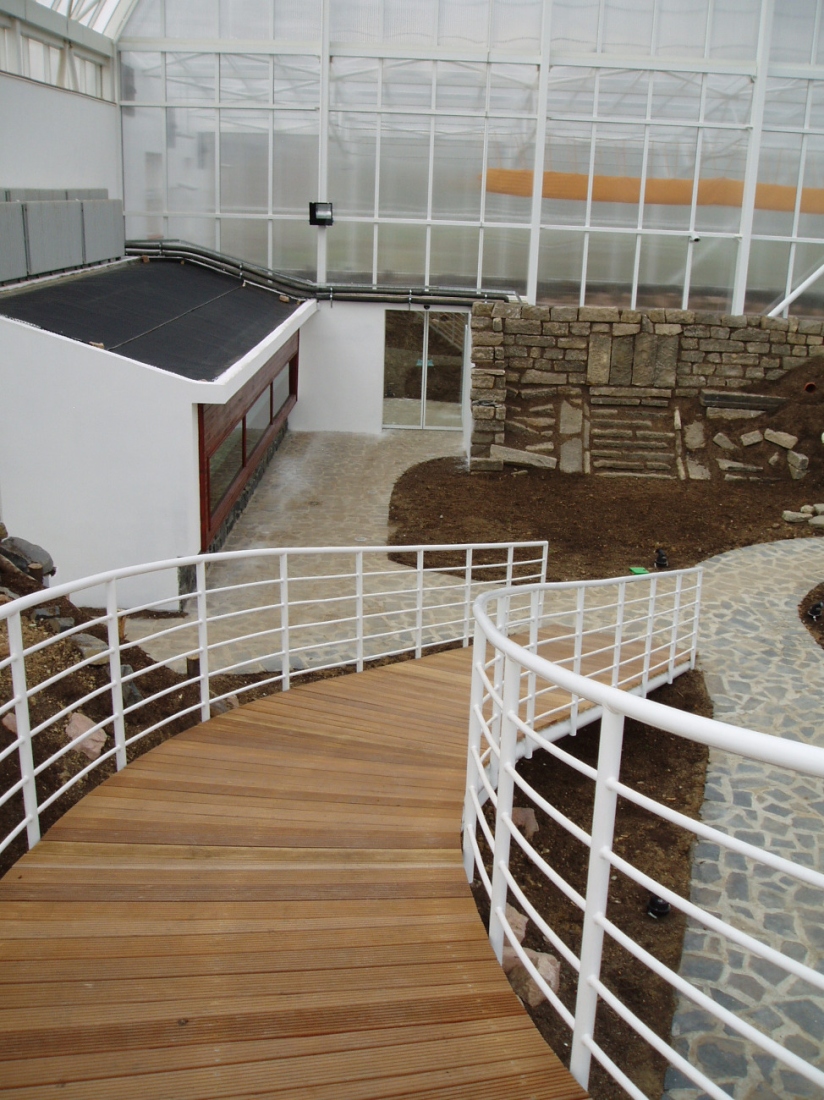
The second set of three aquariums, located at the entrance to the subtropical greenhouse, is dedicated to the flora and fauna of the Neotropics (the tropics of the New World, i.e., Central and South America). The aquariums were built along with the greenhouses between 2005 and 2007, and their renovation is scheduled for 2026. These aquariums have not undergone significant changes in their fish populations in the past, as they have always been dedicated to Central and South America and have always included fish.
Overview of the individual aquariums
| Biotope | Volume | Number of cultivated taxa | Number of kept taxa |
| Central Amerika |
2 500 l |
1 | 6 |
| South Amerika | 2 500 l | 0 | 3 |
| South Amerika | 2 500 l | 5 | 11 |
The first aquarium is dedicated to Central American cichlids, which exhibit interesting social and reproductive behaviors; their highly developed parental care is particularly noteworthy. Unlike most other fish, which often leave their offspring to fend for themselves after spawning, cichlids actively protect and care for them until a relatively advanced stage. This care may include cleaning the eggs, defending the territory against intruders, or moving the fry to safe corners of the aquarium.
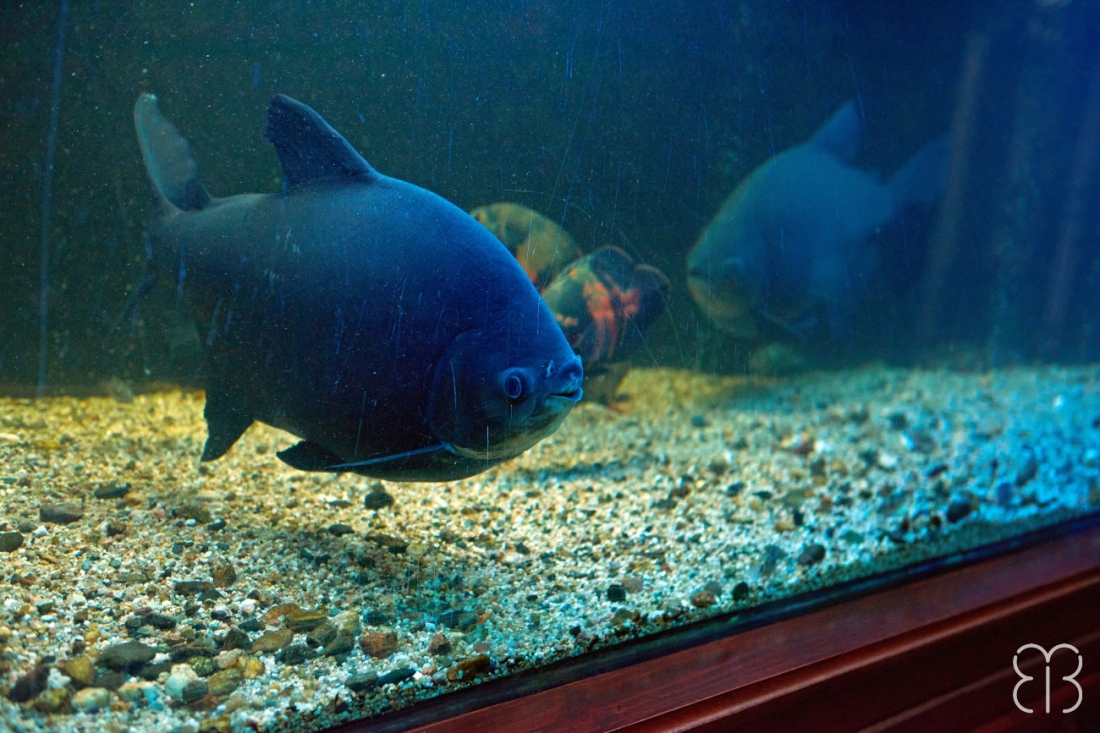
The middle aquarium houses two specimens of the fruit-eating piranha (Piaractus brachypomus, syn. Colossoma brachypomum). The fruit-eating piranha is an omnivore—it consumes green food, fish meat, worms, fruits, and special artificial foods. It has large, strong, flat teeth, which it uses to crush nut shells and pits. Determining its sex is very difficult. Younger individuals have a silvery color with a red belly, but as they mature, their coloration changes to black.
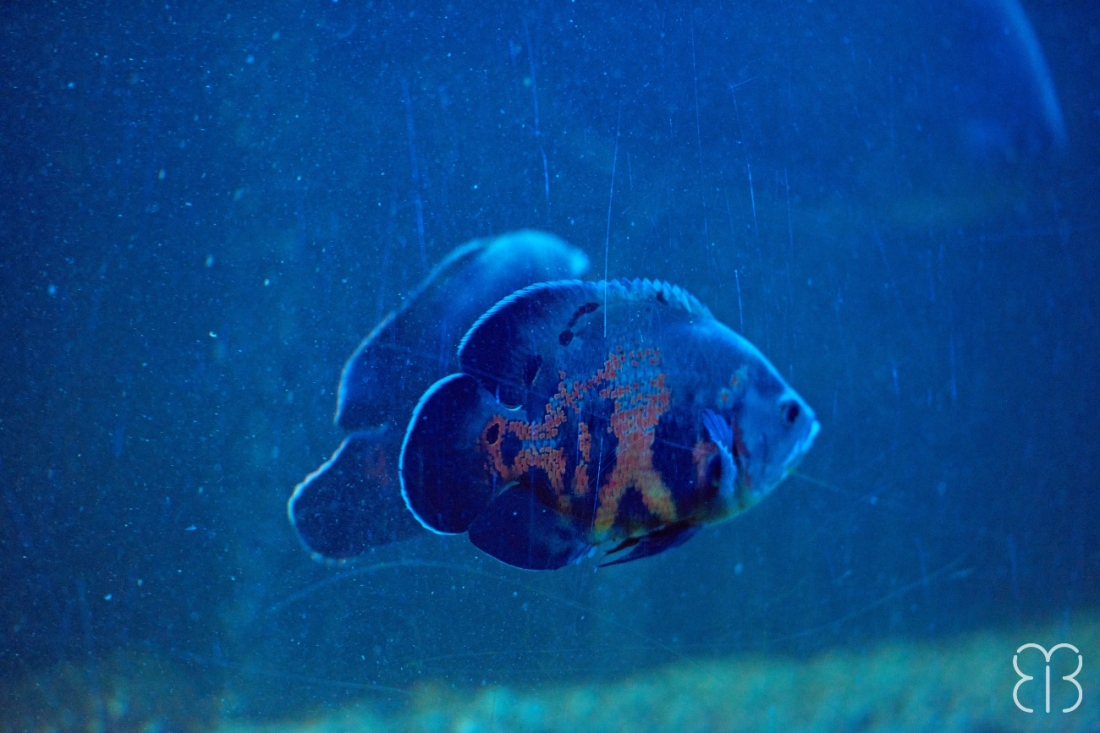
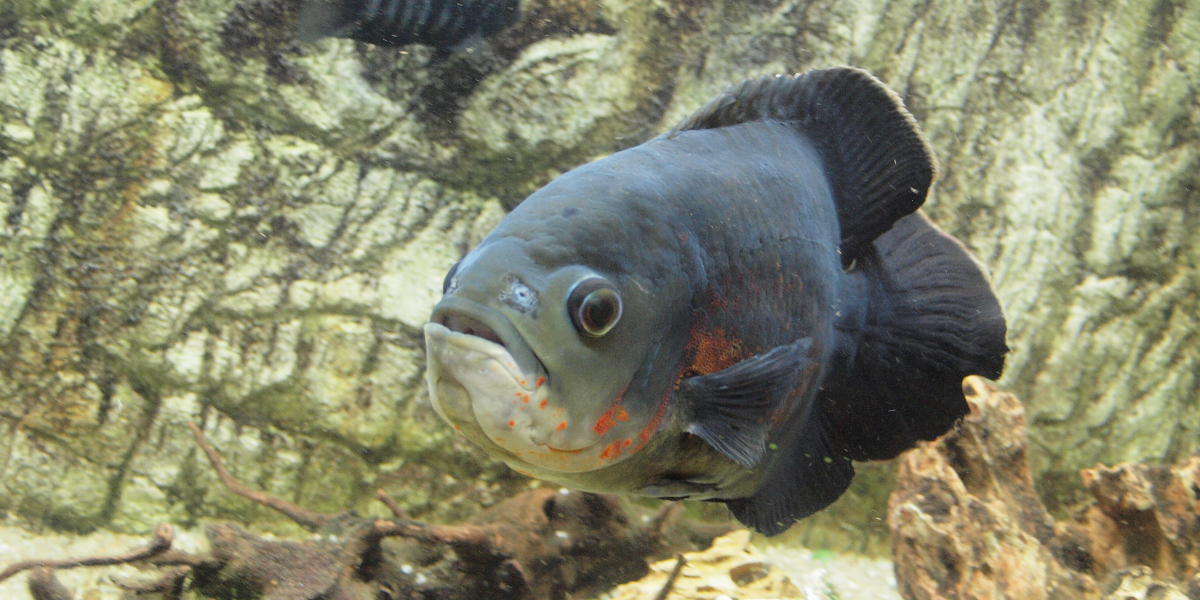
The aquarium is complemented by peacock cichlids (Astronotus ocellatus). Their natural habitat consists of stagnant or slow-moving waters of South American rivers. They are predatory and very active fish that can only be kept with similarly sized fish capable of defending themselves. Ocellated cichlids are tireless workers when it comes to rearranging the aquarium. They are constantly digging, moving things around, and damaging plants in the tank—even large rocks pose little problem for them. When stressed, they lie on the bottom and pretend to be dead for a long time.
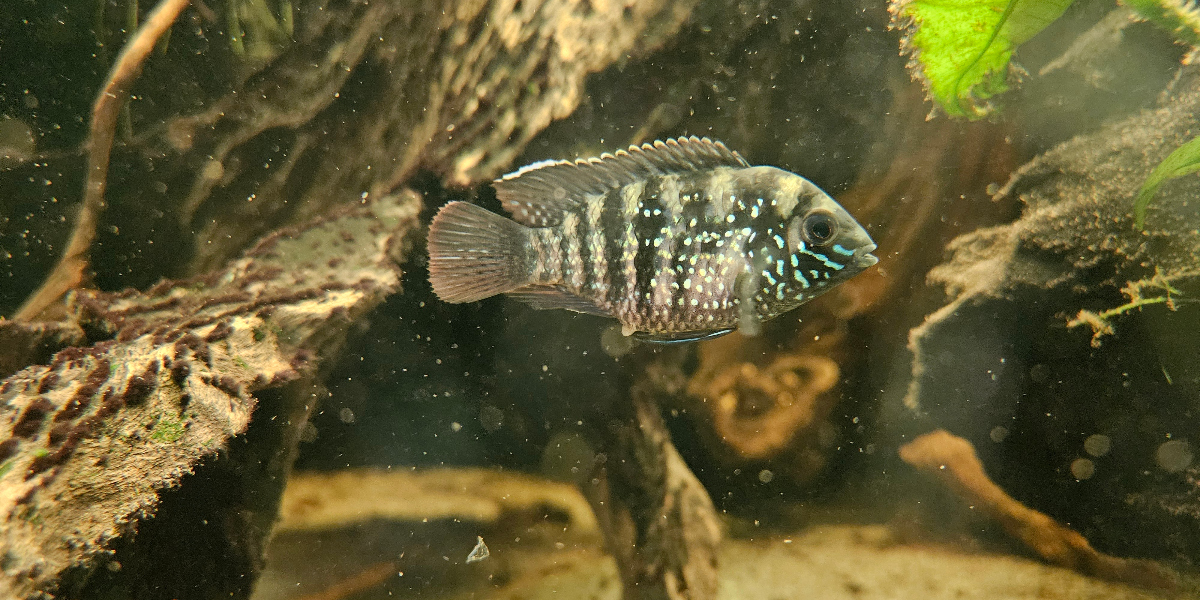
The Black-striped Amatitlania (Amatitlania nigrofasciata) originates from the waters of Central America (Guatemala, Nicaragua, Panama). Like the Peacock Cichlid, it is a bottom-digger that constantly turns the substrate upside down. The male is significantly larger and more robust, while the female is more colorfully patterned, with golden-orange scales on her sides and a turquoise tint to her dorsal and anal fins.
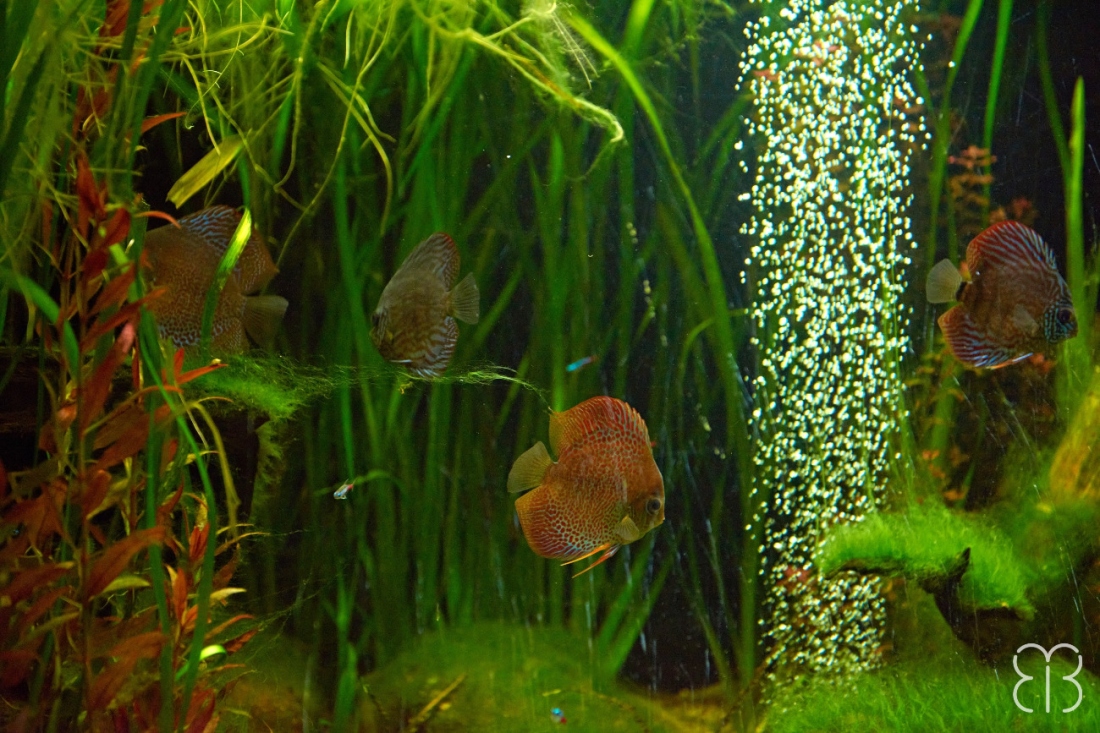
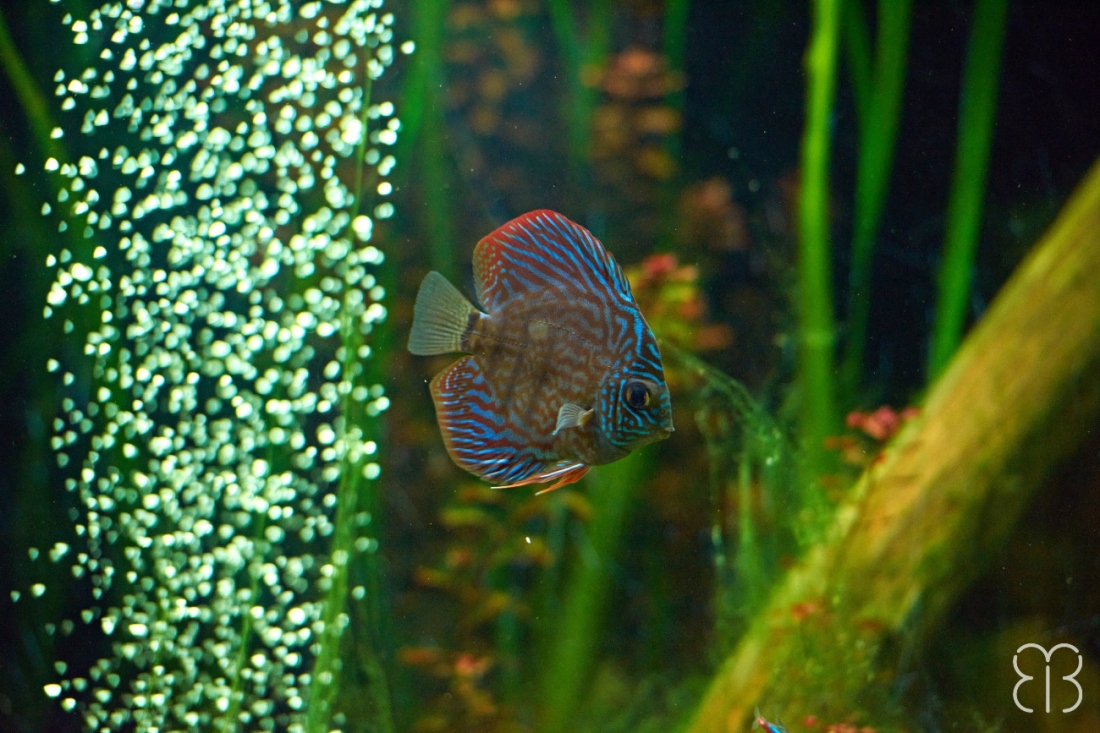
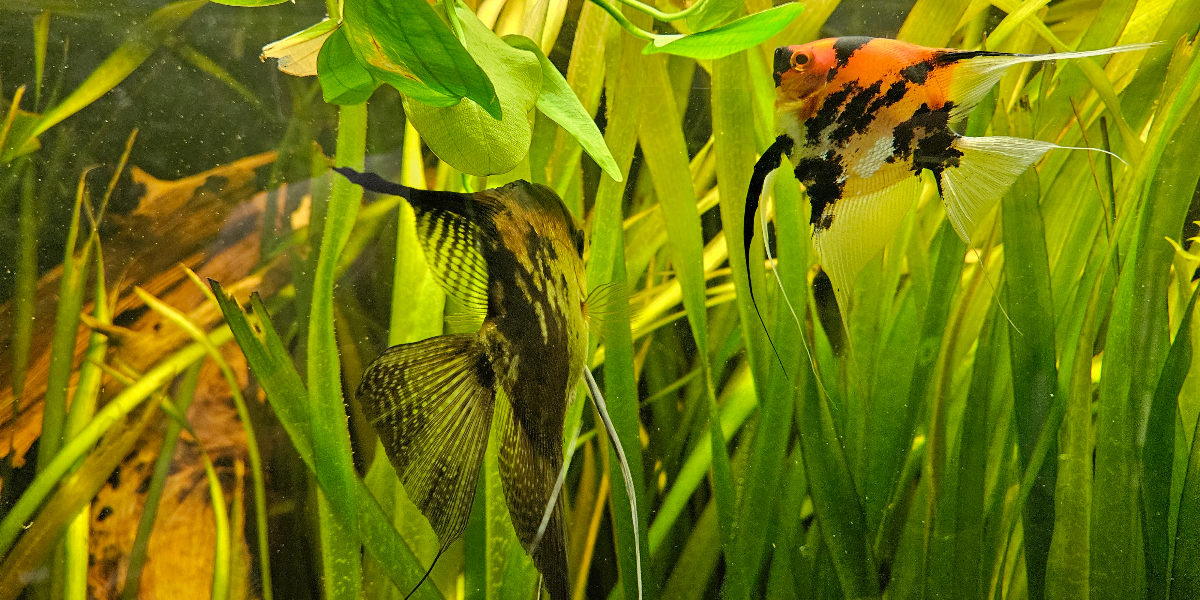
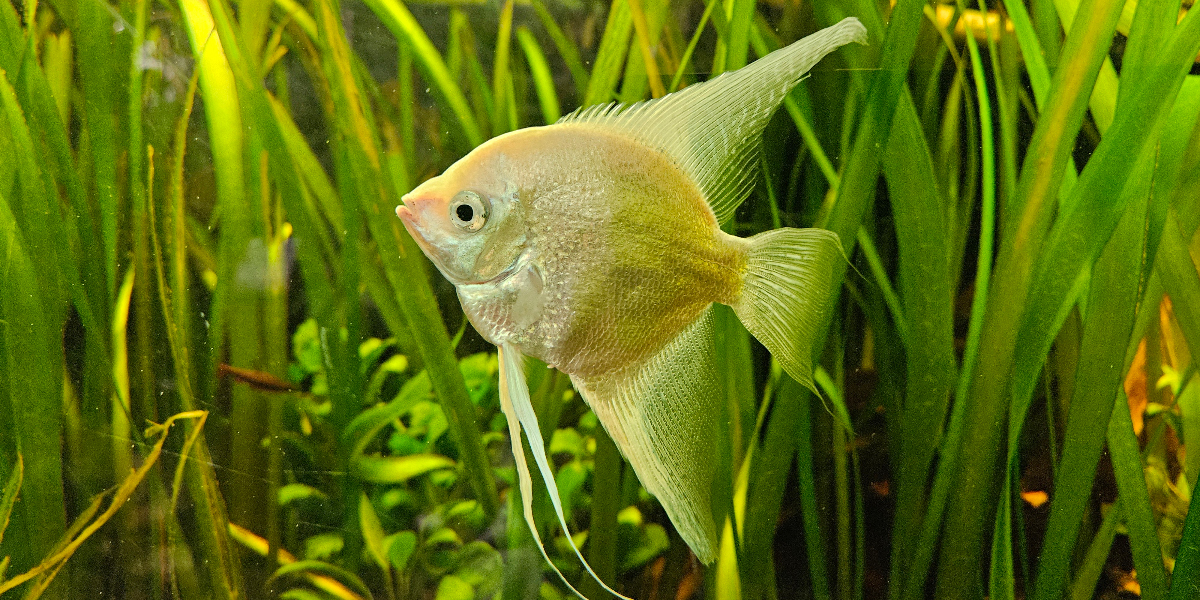
The last aquarium is dedicated to classic species from the Amazon Basin, such as tetras and angelfish. Among the most popular aquarium fish is the Amazon angelfish (Pterophyllum scalare), which was brought to Europe in 1911 and quickly became very popular. Its native habitat consists of slow-flowing, overgrown waters in the Amazon. To date, approximately 41 color variants have been bred, and 30 different color populations are known to exist in the wild.
In addition to our breeders, the South American aquarium is also tended to by one fish—the plecostomus (Ancistrus sp.). You can often see this fish clinging to the front glass of the aquarium, feeding on algae with its scraper-like mouth. Its body is covered with numerous bony plates that resemble a shell. They are most active at dusk and at night. It is designated as sp. (species) due to extensive crossbreeding among three natural species—the multi-spined plecostomus (A. multispinis), the spotted plecostomus (A. cirrhosus), and the blue plecostomus (A. dolichopterus).
Echinodorus – Spearleaf
Aquatic and moisture-loving plants native to the Americas (ranging from the United States to Argentina). To improve their appearance and growth characteristics, Echinodorus has been hybridized, and you can purchase these hybrids at aquarium stores.
Vallisneria – Vallisneria
With 26 species, this plant is found almost worldwide; in Western and Central Europe, it is often found growing wild in the open. It reproduces not only vegetatively through offshoots but also sexually. The fruit is a capsule.
1. Did you know there are holding tanks?
They are located in the same room as the Neotropical Aquariums, but are not open to the public. There are four smaller ones, and they serve not only as quarantine tanks but also as nurseries for younger fish or a supply of young plants for the aquariums.
2. The aquariums ideally complement the botanical exhibits
This isn’t quite the case with the Paleotropical Aquariums, but the Neotropical Aquariums follow the line from the orchid display case, where the greenhouse showcases the tropical rainforests of South America (with an emphasis on Brazil) and Central America (with an emphasis on Mexico and Guatemala). One entire side of the greenhouse is therefore neotropical.
3. Why doesn’t the middle aquarium have any plants?
This aquarium is staffed entirely by engineers who are constantly rearranging the rocks and would turn any planted aquarium into a woodpile.
4. Piranhas are fascinating
They’re savages, but besides fish meat and pellets, they love to munch on sliced apples.
5. Did you know we used to keep a double-bearded arowana?
After the greenhouses opened, the three aquariums were stocked as follows: an aquarium with tetras, a “Black Amazon” inhabited by angelfish, and the last aquarium with stingrays and a single double-bearded arowana (Osteoglossum bicirrhosum). However, due to space constraints, the arowana was moved to the Prague Botanical Garden.